
The World Today and the Politics of Capital: Part-2
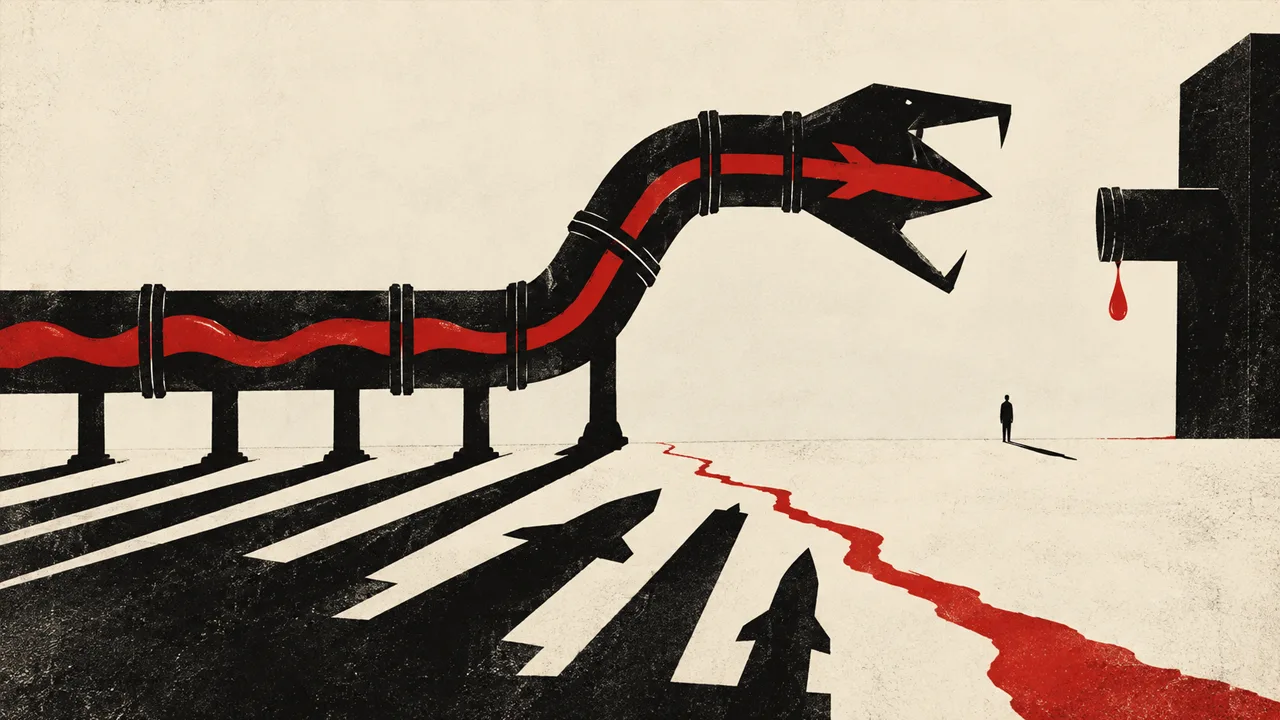
Damaging impact of US policies, actions
The US’ policies and actions also weakened and eventually helped extinguish a popular democratic movement in Iran in the 1950s. Just like the Palestinian people carry a “defeated dream”, the dream of an independent Palestinian state, in their hearts, the Iranian people too lament the unfulfilled promise of the 1979 revolution, a lamentation made worse by earlier disappointments, including the Constitutional Revolution of 1905–11 and the overthrow of Prime Minister Mohammad Mosaddegh in 1953. Incidentally, the failure of the 1979 revolution can be traced to the 1953 coup d’état, engineered jointly by the United Kingdom and the United States, against Mosaddegh.
Mosaddegh was Iran’s Prime Minister from 1951 to 1953 despite the attempts of the Shah of Iran, Mohammad Reza Pahlavi, to oust him. Before the coup d’état, Mosaddegh had introduced a series of socio-political reforms, including social security and land reforms, higher taxes on the rich, and, most importantly, the nationalisation of Iran’s oil industry. The British government vehemently opposed the nationalisation of the Iranian oil industry, claiming to have built it since 1913 through the Anglo-Persian Oil Company, later known as British Petroleum, and thus demanding a majority share in it. But Mosaddegh rejected that claim outright. After Mosaddegh’s ouster, Reza Pahlavi consolidated his power and negotiated the Consortium Agreement with the UK in 1954, according to which control over Iran’s oil production was effectively shared between Iran and a consortium of foreign corporations. Not surprisingly, many of the people who were part of the 1979 revolution, including those who played leadership roles, demanded justice for Mosaddegh by seeking the reimplementation of Mosaddegh-style socio-political reforms in Iran. But Iran’s theocratic regime, which assumed power in 1979, summarily rejected the idea as it consolidated its hold on Iranian society.
Today, the Iranian people face a precarious social order reportedly marked by pervasive corruption, widening class inequality, family fragmentation, a high unemployment rate, social injustice, financial insecurity, and gender inequality. Yet they continue to hit the streets in protest whenever they are denied their rights or face injustice. The US and Israel attacked Iran only weeks after the theocratic regime had brutally suppressed a popular mass movement. Since then, the regime has intensified its crackdown on dissent.
The US has been, deliberately, foiling people’s movements against oppressive regimes and helping dictators in country after country for more than two centuries, beginning with the Monroe Doctrine (1823), which warned European powers against further colonisation or intervention in the Western Hemisphere. The later Roosevelt Corollary (1904), which asserted a US right of intervention, helped provide a rationale for future US domination of Latin America. Focused on securing trade routes and transit zones, the US made incursions into Central America and the Caribbean, launching the “Banana Wars and Gunboat Diplomacy (1898-1930s). It supported Panama's secession from Colombia in 1903 to secure the rights to build the Panama Canal and subsequently control it, making economic and geopolitical capital from it. It occupied Haiti (1915-34), Nicaragua (1912-33), and the Dominican Republic (1916-22) to manage their finances and secure America’s trade routes. A main purpose behind these interventions was to protect US corporations’ investments, especially in the fruit and banking industries, and to expand US capital.
The US’ strategy to take advantage of wars and expand its market (and capital) prompted it to engage in a war in the Philippines (1899-1902) half a century before the Korean War (1950-53) after “annexing” the Philippine islands from Spain — “purchasing” the island country from Spain for US$20 million in 1898 by disregarding the establishment of the First Philippine Republic by nationalist leader Emilio Aguinaldo. The conflict, which began in February 1899, saw the Americans burn villages and crops, torture captives and force them into concentration camps, and set up a government by co-opting local elites, thus fracturing the nationalist resistance. This US strategy to expand its market and capital has not changed except that it has been modifying its tactics depending on the prevailing conditions.
It is this modification of tactics that we are witnessing in West Asia, which incidentally doesn’t seem to be working. In mid-August, Trump threatened to declare the Strait of Hormuz “a territory of the United States” when its efforts to revive the peace talks with Iran came to a standstill. “After we finish defeating Iran, which is being very badly defeated, pretty soon I’ll be declaring the Hormuz Strait a territory of the United States,” Trump declared. But Tehran remains adamant that the reopening of the Strait of Hormuz will be under Iranian authority, even as the US has renewed its attack on Iran and the latter is targeting US allies, especially those that have US military bases, in West Asia.
Deepening crisis
This aggressive US attempt to consolidate, as well as expand, its hold on regions across the globe, together with the intensifying arms race, has led to a new “Cold War” between the US and Russia. Between the US and China, the militarisation of space and use of AI in warfare, which have increased the dangers of a nuclear war manyfold, along with accelerating climate destabilisation, has compelled the Bulletin of Atomic Scientists to move its doomsday clock to 85 seconds to midnight, the closest it's ever been to catastrophe. Such is the speed of climate destabilisation that Earth System scientists warn that we may be approaching a “Hothouse Earth” trajectory, in which self-reinforcing climate feedbacks could become extremely difficult to reverse. The world is already in the grip of a supersized El Niño, which has dramatically raised sea surface and subsurface temperatures in the central and eastern tropical Pacific and could help make 2027 the hottest year on record. Yet major multinational oil companies continue to expand fossil-fuel extraction despite climate warnings, with not-so-tacit support from Trump, so they can keep extracting fossil fuels, including some of the most greenhouse-gas-intensive varieties, and reap increasing profits. In fact, capitalists seem to be celebrating the melting of the Arctic ice due to global warming, for they see an ice-free Arctic as a new El Dorado, where oil and gas can be exploited without regard to the consequences for the planet. It’s no longer a secret that the leading economies today prioritise accumulating wealth for a few rather than combating climate change and serving the people for whom their leaders were elected.
Given the fast-deteriorating global landscape, some would argue that China is free of most of the above vices, partly due to its seemingly unstoppable economic advance despite its deep social, political and ecological contradictions. But this is not the China of 1949. The Chinese economic development model today carries within it many of the destructive tendencies of capital accumulation. The country is caught up in the crises of capitalism because of the pressures created by its efforts to integrate into global systems and the presence of capital in almost every sphere of Chinese society. True, China is governed by a party which, on paper, critiques capitalism and promises to create a path beyond the crises toward socialism (which the Chinese leadership calls “socialism with Chinese characteristics”). But the critique is for public consumption and to appear different from the capitalist societies. In reality, capital has spread deep enough into China’s socio-political and economic system to turn it into a capital-driven, profit-seeking economy.
Expecting China to carry the torch of hope in an increasingly dreary world is therefore a forlorn hope, because it is too focused on resolving its own crises to think about the rest of the world. China has been making extensive efforts to reduce its reliance on fossil fuels by increasing renewable energy generation, boosting electric vehicle production, securing its food grain-growing area, expanding its trade, and raising its overall productivity, with the active help of AI. Still, it may join other powers to help resolve the West Asian or other regional or international issues only when they appear to affect its normal flow of trade and capital accumulation.
Yet a majority of international problems are connected, in one way or another, to the West Asia issue, and the same cannot be resolved unless the Palestinian question is settled. Indeed, the cause of many of the global issues can be traced to the Palestinian question, a question which can no longer be settled through the “two states” solution, for a large percentage of both Palestinians and Israelis today do not believe in the parameters of the Oslo Accord. So no matter how desperately the European powers push for a solution to the Palestinian question based on the “two states” framework, they are not likely to succeed. As Edward Said said, the continued expansion of Israeli settlements in Palestinian territories has physically intertwined the populations, making a separate, viable Palestinian state impossible. He asserted that carving out a weak, fragmented Palestinian state would only lead to perpetual subjugation or a form of apartheid, making a unified secular state the only moral and lasting solution. But Said’s advocacy for a single, democratic, “binational state” where Israelis and Palestinians could live as equal citizens with shared rights is no longer possible either, given the expansionary and despotic policies of Israel. A “binational state” would remain only on paper and the Palestinian people would be reduced to second-class citizens of a state run by elitist Jews without any regard for equality, fraternity and justice.
Given the current state of affairs in West Asia in particular and in the world in general, big governments, elected leaders, or diplomats don’t appear to be interested in resolving any of the burning regional or international issues, for they have mastered the art of exploiting them for their own benefit. They’d rather allow the issues to become more complicated and explosive so they could use them to strengthen their hold on the world, earn more profits for the military-industrial complex and expand corporate capital.
The UK, France and Canada have announced plans for measures against Israeli settlements in the West Bank. Still, such moves are nothing more than token gestures aimed at maintaining the moral high ground and absolving themselves of turpitude. And the US may have resumed its attack on Iran, but Trump cannot prevail, and Iran in all likelihood will never capitulate. As such, Trump may have to eat crow, and yet that would not resolve the Strait of Hormuz crisis, let alone bring peace to West Asia or any other part of the world.