
The World Today and the Politics of Capital: Part-1
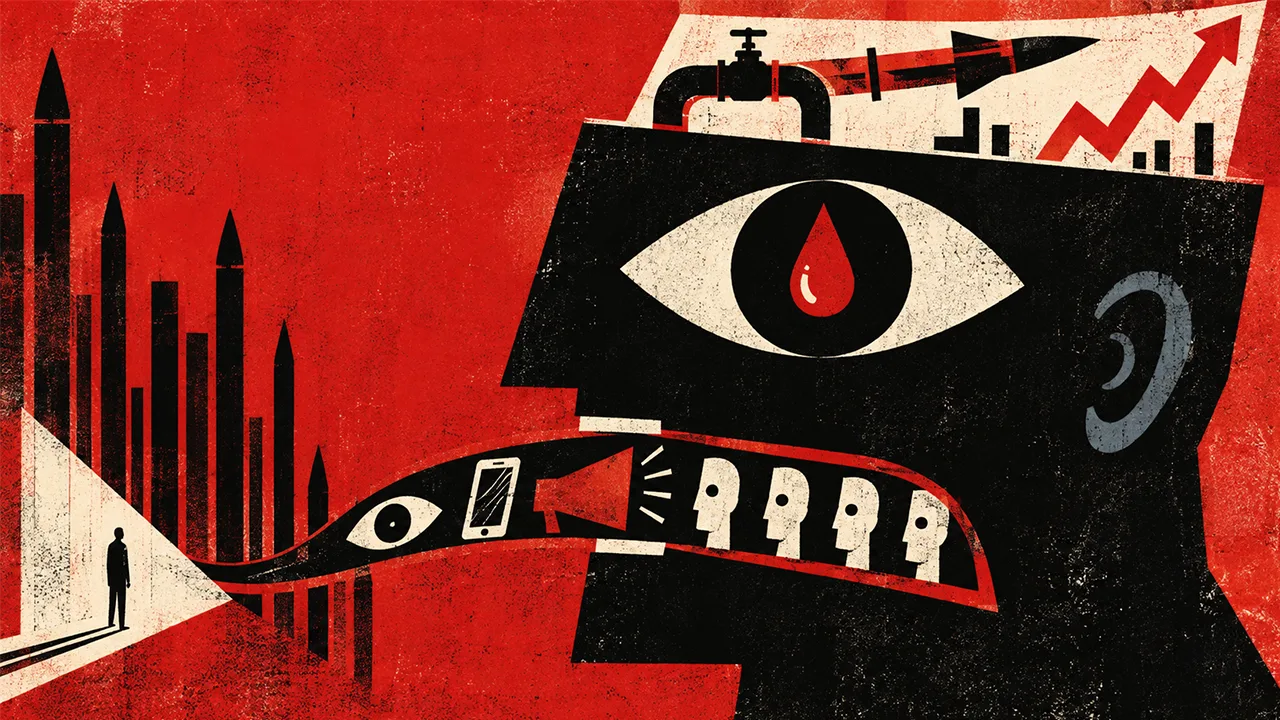
The off-again, on-again US (and Israeli) attacks on Iran, and Donald Trump’s repeated chest-thumping, along with Israel’s continuing genocide in the Gaza Strip and assault on the West Bank, as well as Lebanon, may have several dimensions. Still, the main reasons driving Trump and Benjamin Netanyahu are Islamophobia and geopolitics, not necessarily in that order — the geopolitics of capital, especially oil production and market expansion. Indeed, the overriding factor (expansion of market) driving the US (and many other Western countries) in its quest for global supremacy cannot be overstated. The onslaught on Iran and the massacre of the Palestinian people can also be seen as the “Crusade of the 21st century”. The US and Israel have even adopted the age-old strategy of assassinating top West Asian leaders, to demoralise and cripple the West Asian countries they consider “evil”.
World War I, global powers at the time claimed, was a war to end all wars. Yet just 21years after the end of the Great War, World War II broke out. Again, the world leaders at the time claimed the war would end all wars. Within years of the end of World War II in 1945, the European powers, both victors and vanquished, initiated the economic integration of the continent to make “war unthinkable and materially impossible” and reinforce democracy among the members of the proposed “European Union”. Following several declarations, committees, and treaties, the European Economic Community and the European Atomic Energy Community were established by the Treaties of Rome in 1957. The European Union (EU) eventually became a reality in 1993, following the signing of the Maastricht Treaty in 1992; the euro was launched as the EU's common currency in 1999, with euro banknotes and coins entering circulation in 2002 — although some EU member states (the United Kingdom, for example, while it was a member) didn’t adopt the euro as their currency.
The economic union of Europe was supposed to strengthen inter-country ties and prevent wars among EU member states. But the European powers had also signed a cross-Atlantic military treaty, the North Atlantic Treaty Organisation (NATO). The Maastricht Treaty has prevented war among the signatory EU member states. Still, since many of them have also joined NATO, they have willingly joined wars launched by non-European powers (mainly the US) against non-NATO members. It is this contradiction that US-EU capital has used to further the West’s military industrial complex’s goal of maximising profits by triggering wars and selling arms and military equipment to the warring parties whenever the “normal multiplication” of profits through capital investment has faced problems. The continued eastward expansion of NATO — despite Russia’s warning to prevent the North Atlantic military organisation from reaching its borders and thus threatening Russian security and what Russian leaders regard as Western assurances that NATO would not expand eastward, a claim that remains historically disputed and was never embodied in a treaty — is what Russia claims forced it to attack Ukraine. That Russia can never be condoned for invading Ukraine is a no-brainer. But the circumstances, including those disputed Western assurances on NATO expansion and the West’s later promises to help Ukraine with arms and other military equipment, also need to be considered when analysing the West’s geopolitical strategy. The result: thousands of Ukrainians and Russians have been killed, and infrastructure, especially in Ukraine but also in Russia, worth billions of dollars has been destroyed. Among the beneficiaries, as expected, have been the Western countries (mainly the US and European states) that are selling weapons and military equipment and providing loans to Ukraine.
Does the fact that selling weapons, military, and surveillance equipment to other countries has become a convenient way to increase profits, expand markets, and consolidate the power of capital signify the failure of capitalism as a social system? We will come to it later.
Markers of today’s world
Slowing economic growth, persistent poverty, high income and wealth disparities, large employment gaps and underemployment, and worsening environmental and ecological degradation are but some of the markers of today’s world. The devastating flood in Nepal following the bursting of a lake formed by melting glaciers, the unprecedented heat waves, including in European countries, the wildfires across the world, and the rapid melting of glaciers and polar ice sheets are clear impacts of global warming. Yet, some countries and leaders are still in denial, for accepting the truth would mean ending business as usual, which would hamper the march of capital.
Equally important, the digital and artificial revolutions, hailed by corporate giants and billionaires as the greatest technological advancement in history (or the Fourth Industrial Revolution), which would free communication, have instead consolidated the powers of surveillance and control regimes across the world, and contributed to layoffs and the devaluation of human labour while raising fears of future job losses, leading to social disillusionment worldwide. Technological advancement, no doubt, has raised productivity, which in turn has also led to overproduction (or overcapacity) in multiple sectors in some countries. This, according to Marx, is inevitable in capitalism because technological advancement and the resulting rise in productivity increase the amount of material wealth (use value) while reducing the economic value of that wealth. This phenomenon leads to the paradox of “reserve army of labour” and “poverty in the midst of plenty”. Amid persistent poverty and unemployment, which inevitably lead to underconsumption, overproduction becomes a burden on capitalists, who then desperately seek new markets for their products.
As a result of underconsumption and the slowdown in global trade growth in 2026, corporations have shifted their focus to the military-industrial complex. Conflicts and wars, in today’s world, especially the Russia-Ukraine war, the war the US and Israel have launched against Iran, and Netanyahu’s genocidal assault on Gaza and the West Bank, ought to be viewed in the context of rising productivity and the declining economic value of the wealth thus created. However, many other factors drive rogue capitalist states in these wars.
Despite the dire state of the world on almost all major fronts — economic, political, social, cultural, and climate — the most influential powers, the in-essence oligarchy of governments, big corporations, financial institutions and their so-called expert advisers, are in complete denial of the plight of the global population (especially the Palestinian and other vulnerable people) and the environment.
For such governments and giant corporations, the agenda of continuously increasing their profits to consolidate their control over society is supreme, a quest that is fed and driven by mainstream media and parts of social media. To further their quest, the in-essence oligarchy of the rich and the powerful, powered by right and far-right forces, is slowly dismantling the existing institutions, ironically built by the same capitalist countries, and the public education system in many countries, including India) and building an elitist education system, whose very structure is designed to keep out “unwanted elements” (the poor, and free-thinking minds). In fact, the education system is being restructured in a way that would make privatisation of the sector seem the obvious choice even to some government critics, and churn out an educated class that sees the world only through the lenses created by the oligarchy. This government-led not-so-covert move to privatise and corporatise education is causing the progressive subordination of children’s needs to the commodity market’s cash nexus. As a result, the policies that govern people in a majority of countries today are a mixture of ignorance, hubris, self-interest and control.
Narrative and manipulations
Fake news, post-truth, an imaginary golden past, perceived (or non-existent) internal and external enemies, binary politics, surveillance, and naming and shaming of the oligarchy’s victims have been propagandising the ruling class’s narratives, and spreading hatred against people belonging to certain religions and castes, and political groups. The mass media and the propaganda and fake stories they spread as part of the oligarchy’s larger matrix have, to a large extent, merged into social media-based narratives, which, incidentally, despite being more porous and unregulated, are more universal and yet increasingly favour money and power. Through ever-developing marketing and surveillance techniques, vested interests have been spreading (for instance, through WhatsApp groups) their prejudiced agenda almost unchecked. Countless businesses that have mushroomed in country after country have engaged in high-tech-driven voter manipulation while offering their services to the highest bidders. Worse, to intensify their drive and further spread their narratives, big corporations are buying out independent traditional media and social media organisations.
Do these developments reflect the desperation of the oligarchy and the unravelling of capitalism? Desperation of the oligarchy and failure of capitalism, yes, but it would be foolish to assume we are witnessing the unravelling of capitalism. True, the institutions of liberal democracy are collapsing, and the rearguard of the capitalist system (the rightist forces) is gaining in power and fuelling conflicts and racism. But capitalism is still drawing blood from the surplus value produced by overexploited populations across the world, particularly those in developing and least-developed countries, thanks partly to the Western powers-devised international division of labour, which has helped the central forces of the global economy (the industrialised states) more rapidly and intensely amass wealth that has in turn increased poverty in the periphery (mostly among least-developed and developing countries).
The oligarchy’s machinations have also led to another devastating phenomenon: the rigging of elections in quite a few countries, with the entire election process becoming a one-sided game, in large measure due to the infusion of “black money” by corporations and billionaires into elections.
Wars between West Asian countries, engineered by the US and other major powers at the core of the capitalist system, have been projected by the Western media as the normal outcome of regional rivalry. Surprisingly, many still argue Barack Obama was a far better US president when it came to US foreign policy and presidential decisions, in their effort to demonstrate how destructive for the rest of the world Trump’s policies are, while conveniently ignoring the fact that during the Obama administration, Washington was engaged in wars or launched attacks on seven countries — Afghanistan, Iraq, Syria, Libya, Yemen, Somalia and Pakistan. The incumbent US administration under Trump now has re-institutionalised assassinations and kidnappings of other countries’ leaders as instruments of war against countries that, he alleges, breed or finance terrorists, or practice oppressive policies. For instance, he has labelled Iran a “terrorist” state so he could use it as a pretext to bomb the country.
However, Trump’s “tough guy” image was shattered by revelations in the second week of August. The US president had to take a secret military flight out of Turkey after the NATO summit there. At the same time, the White House publicly announced that he was flying on Air Force One, which is proof of his skewed foreign policy, rising insecurity for Americans, including Trump, and increasing volatility in West Asia. In an elaborate ruse, Trump boarded Air Force One in full view of news channel cameras only to secretly make his way, guided by US Secret Service officers, to a catering truck. Then, unbeknownst to journalists and even some of the White House staff who remained on Air Force One, he boarded another military aircraft which flew him to the United Kingdom. What necessitated this embarrassment was his unnecessary war against Iran, ostensibly to further Netanyahu’s agenda of not only obliterating Palestinians from “the face of the Earth” and burying, once and for all, the Palestinian question but also to deal Iran a blow from which it would “never recover”. US officials used the stratagem because they feared Iran might make an assassination attempt on Trump, a heinous practice the US president revived. This shows that, despite all his sabre-rattling and fantastic claims, Trump remains, as the Americans would say, a “yellow-belly” at heart. If the yellow-belly “honorific” reminds you of someone closer to home, it’s no coincidence, for that’s characteristic of all dictators, present and past.
But more than that, it highlights the failure of Trump’s war against Iran in particular and his inconsistent and skewed foreign policy in general. Even more importantly, and distressingly, the devastating airstrikes the US and Israel launched against Iran in late February came only weeks after a powerful mass movement against the theocratic regime, which has ruled Iran with an iron hand since 1979, had been brutally suppressed. Instead of destroying Iran’s military capability and nuclear programme, and bringing the regime to its knees, as Trump had claimed, the theocratic regime has since tightened its hold on Iranian society and intensified repression.
(To be Continued)