
Fascism, Democracy and the Long Oppositional Struggle: Part-1
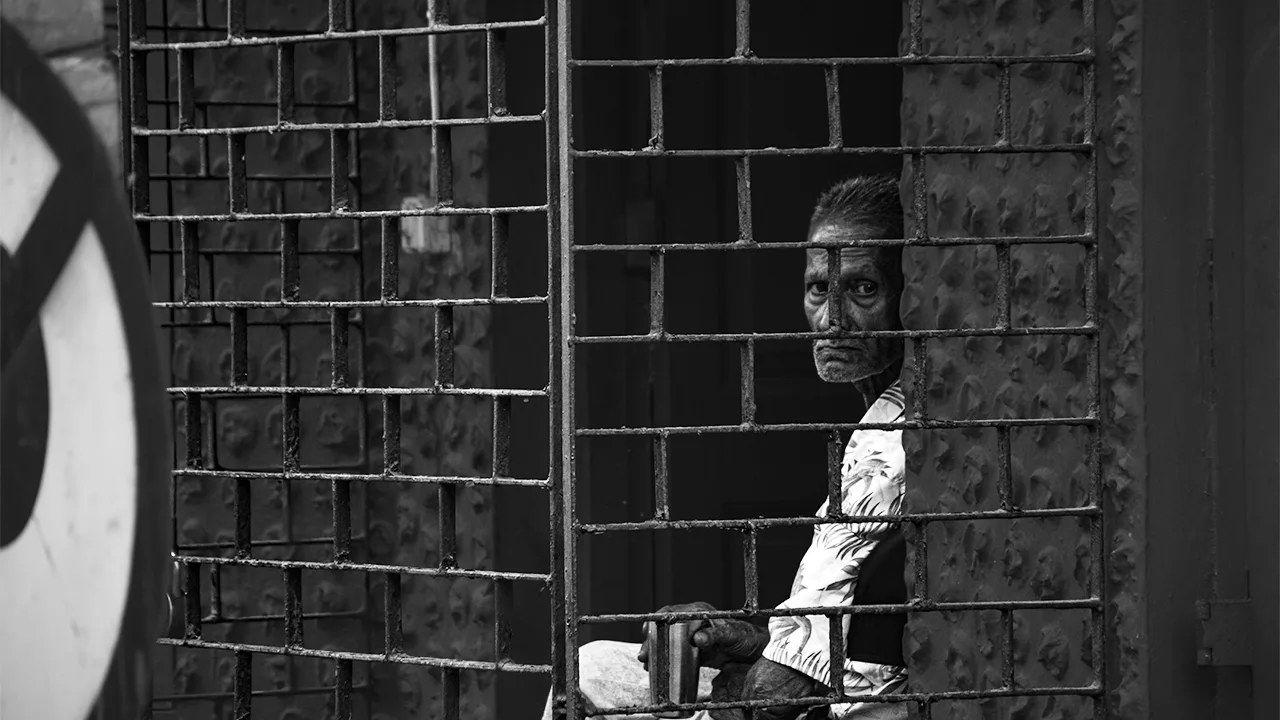
(Translated into English from Original Bengali Text)
It has been about four months since the 2026 West Bengal Assembly election. The BJP is in power in the state, having won 207 seats; the Trinamool Congress is down to 80 seats. In terms of vote share, the BJP polled 45.84 per cent and the TMC 40.80 per cent. A gap of roughly five percentage points became a 127-seat gap. After the 2019 Lok Sabha elections, I wondered how a Bengal that had been ‘red’ for so long was turning saffron at such astonishing speed. Seven years later, the question is bereft of any amusement. Saffron Bengal is no longer a fear, a sign on the horizon, a possibility. It is a formidable governmental reality. How did this happen?
There are easy answers. People were tired of 15 years of Mamata Banerjee-Trinamool Congress rule: corruption, local strongmen, job scandals, all of it. Add to that the BJP’s organizational heft (to win elections), unprecedented money power, Modi and Shah, Hindutva, the Bangladeshi infiltration narrative. An election was held; people voted; the TMC lost; the BJP won. That happens in a democracy. Certainly, but is that all that happened?
Before the election came the Special Intensive Revision, or SIR; at first, the names of many voters were called into question; in the end, more than 2.7 million people marked ‘under adjudication’ simply disappeared from the election rolls. A very large percentage of the appeals against this ‘disappearance’ remained where they were until polling day; in most of the cases, they remain there to this day. Who knows when they will be settled? In at least 49 constituencies, the number of excluded voters exceeded the margin of victory. This does not mean the result in every one of those seats would necessarily have been different, or that the BJP’s 207-seat victory can be dismissed simply as fraud. It cannot. But it is equally difficult to believe the comforting story that the democratic process, called an election, was pristine and neutral, and that it allowed all eligible voters to exercise their right to vote.
Mamata Banerjee has called the Election Commission the ‘BJP’s commission’ and alleged that votes were ‘stolen’. The Commission denied the charge. Let the courts, the Commission and the parties establish what can or cannot be proved. My question is different. Over the past 10 to 12 years, institutions of an increasingly centralised state — from investigative agencies to universities, from media outlets to the electoral machinery — have become part of pervasive statist hegemony. Can we understand the Bengal election beyond that larger picture?
We cannot. If fascism, to us, means police brutality, prison, censorship, persecution of minorities or the photograph of a dictator, we will recognise the danger only when it’s too late. Historically, we’ve been late before. History is repeating itself as tragedy now.
Fascism is not a government; it is a social arrangement
If fascism began the day a fascist party formed a government and ended the day it lost an election, there would be little to worry about. Press a button every five years, and the problem is solved. But that has never been the case.
Fascism was never the story of only Hitler, Mussolini and Franco. The work began much earlier. Workers’ anger was redirected; Jews, communists, foreigners, migrants and religious minorities were manufactured as enemies; imaginary stories of past glory were woven; nation and state were fused into one. Simultaneously, capital — especially big capital — wanted stable rule, weakened labour movements, and guarantees for property and profit. There were brown shirts and black shirts on the streets; behind them stood bankers, industrialists and bureaucrats.
There is no reason to believe fascism in contemporary times will arrive in precisely the same costume. Times have changed, so has capital. Like factories and workers, exploitation remains a reality. But finance has expanded, along with proliferating forms of debt, rent from land and property, and dazzling forms of technological and information capital — patents, platforms, data. Profit no longer comes only from making things. It also comes from controlling what others make and continuously extracting rent from other people’s labour and lives. A landlord charges rent, a bank charges interest, an app demands a commission; a platform turns our writing, photographs, friendships, anger, fear and habits into a marketplace. This is a new rentier reality. Ownership no longer means only owning a factory. It means owning the road, the network, the data, the software, the gate through which one enters the market. Whoever owns the gate collects the rent.
Rent, debt, platforms: capital’s new body
It would be a mistake to treat this new reality simply as a technological wonder. We have to see how the old forms of capitalist profiteering connect with new forms of rent. Production continues, factories continue, but an increasing share of profit comes from control: the control of land, credit, communication channels, software, and information. Urban property prices rise, and rents rise with them; farmers pay interest on debt; small traders pay commissions to digital payment systems and platforms; a gig worker depends on an app for work, and that same app decides working time, payment, ratings, even the rules of invisible punishment. The factory owner is visible. Platform ownership often is not. Yet the platform controls the doors of everyday life. That invisible ownership is one of the great sources of power today.
This is where the connection with fascist politics begins. In a society where most people lose control over the important decisions of their lives, it leads to the accumulation of anger, humiliation and insecurity. Jobs are scarce and, when available, they’re insecure; education costs more; health is a market; housing rests on debt; the future is uncertain. There is no automatic law that would direct this anger against capital. Hence, it’s often much easier to redirect it elsewhere. Your life may be controlled by banks, corporations, markets and platforms — but you are told that the cause of your misery is the Muslim next door, the Bangladeshi migrant, the Dalit who received reservation, the migrant worker in your city, or the ‘anti-national’ student. Real power remains invisible; a visible enemy is created.
We log into Facebook for free. Search Google for free. Talk on WhatsApp for free. But for these apps and platforms, we are not only customers; we are also products and workers. Every click, every scroll, every burst of anger, every expression of affection, who our friends are, who our enemies are, how late we stay awake, which story frightens us — everything accumulates. Our accumulated lives become data; data becomes capital. The relationship between digital capital and fascism is therefore not accidental.
The social work of fascism is to manufacture enemies. The business of the digital market is to keep excitement alive. Calm, slow, reasoned speech travels less easily; fear, hatred, shock, scandal and insult travel faster. An algorithm wears no saffron scarf and attends no RSS shakha. Its job is to keep us on the screen so that advertisements can be seen, data can be produced, and profit can be increased. But an economy of technology built on excitement, addiction and ceaseless reaction is exceptionally hospitable to fascist politics. Exceptionally.
A lie takes no time to tell. ‘They’ are taking your job. ‘They’ will take your daughter. ‘They’ will destroy your religion. ‘They’ will divide the country. Write two lines, attach an old photograph, send it to a thousand groups. In a few hours it becomes ‘truth’. History, statistics, argument, the long years of social experience of real people? Those move slowly. Often they never arrive. Fascism has an enormous advantage here. It does not need to persuade society into a new understanding; it organises into a force the already existing fear and resentment. Equality has to be taught. Hatred only has to be provoked.
The digital market does not just sell news; it manufactures common sense.
Another factor to be aware of is that fascism does not always win by changing a person’s mind overnight. More often than not, repetition makes the previously unthinkable ordinary, natural. A sentence once embarrassing to utter in public becomes a joke, then an opinion, and finally common sense. ‘That community has too many children.’ ‘Those people are not really patriotic.’ ‘Human rights mean siding with criminals.’ ‘A protesting student is a spoiled child.’ These propositions first enter as jokes, memes, forwards, short videos, and gossip. Politics shifts from public meetings to morning tea time, family WhatsApp group, conversation among parents outside a school. Perhaps this is how hegemony works at its most effective: people begin to experience the ruler’s language as their own.
This is why fact-checking alone is not enough. It is necessary, of course, to expose lies, verify claims, and scotch propaganda. But if people already inhabit a moral universe in which ‘they’ are less human, deserve fewer rights, and can legitimately be subjected to extra state violence, a fact-check will do very little. The struggle is over facts, but also over feeling, morality and everyday relationships. Who do people mix with? Who do they trust? Whose suffering do they recognise as their own? Politics is rooted there.
Why the RSS exists, and why we do not
An uncomfortable truth has to be said. Facebook did not create the BJP. WhatsApp did not create the RSS and its affiliates. The BJP-RSS can use today’s digital technologies so effectively because it had social organisations long before those technologies existed. There were shakhas, schools, temples, festivals, teachers, pracharaks, service organisations, people in neighbourhoods. They have been grinding away for a century. They failed in many places, were laughed at, but kept working.
In other words, the bright screen had hard ground beneath it, whereas we have often travelled in the opposite direction. The soil dries out; the screens multiply. There was a time in Bengal when the Left meant much more than a party office. There were peasant organisations, trade unions, student bodies, neighbourhood study circles, theatres and songs, refugee-colony struggles, food movements, struggles over land. People did not meet the Left only on election day. They encountered it at different points in life. Wages too low? There it was. A landlord or jotedar harvesting the crop without paying for labour? There it was. Trouble at school? There it was. Had the police arrested someone? There too. A neighbourhood library? There as well.
Electoral strength grew out of those many forms of encounter — out of long years of organising. Organising did not grow out of votes. Then the sequence reversed. The longer the Left remained in power, the more its social organisation was turned into state organisation. The panchayat ceased to be a space of social self-government and became an administrative arm of the party; unions learned to mediate rather than struggle; the party stopped organising society and instead sat atop it. Winning elections gradually became the central — almost the only — objective of politics. A Left born from oppositional social work against the domination of state and capital learned to speak in the language of the state.
From social organisation to administrative machinery
It is easy to describe this transformation as the moral decay of leaders. The longer a Left force remains in state power, the deeper the contradiction it faces. On one side, it must run an administration — budgets, police force, bureaucracy, development, land, industry, electoral arithmetic. On the other, if the social forces that voted it to power retain their autonomy, they will question the government. That can spell danger. If an autonomous peasant organisation, an independent union, a neighbourhood body or a student association embarrasses the government, the easy solution is to reduce it to an extension of the party. The relationship between the party and society then changes. Earlier, the party existed within people’s struggles; later, people slowly came to exist within the party’s administrative network. Dissent declines, dependence grows. The price is not paid only on the day an election is lost. Long before that, the political vitality of society had begun draining away.
That arrangement for the Left in West Bengal broke in 2011. Society was not liberated. Another party moved into the space vacated by the old social-state occupation. During 15 years of Trinamool rule, neighbourhood strongmen changed, the colour of flags changed, but the relationship between state and society changed very little. Development, grants, jobs, police, leaders, all came from above. People became less of citizens than beneficiaries. Government schemes and dependence on the party replaced organised social power.
In 2026, power changed hands again. This time the incumbent party is backed not merely by a state organisation but by the enormous resources of the entire state (including the central government), a national Hindutva network, capital, media and vast digital machinery. The word ‘change’ therefore carries a different weight now. The danger ought to be easier to see. Is it?
The streets shake. Then what?
Over the past 15 years, the world has seen uprising after uprising, people’s movements and rebellions in the streets: Tahrir Square, Occupy movements, Gezi Park, the Indignados protests, Hong Kong demonstrations, and popular movements in Sri Lanka, Bangladesh and Nepal. Governments have fallen, presidents have gone, parliaments stormed. It looked magnificent on camera: hundreds of thousands in the streets, police retreating, rulers fleeing. Then what?
That is the question. The head of state is gone; what about the body? Police, bureaucracy, land property, capital, banks, markets, and multinational corporations continue to play the same roles. The old relationships of power in society remain. Put a new face at the head of the state, but does that change society? It does not.
In social movements, we need to distinguish between organisation and organising. An organisation may be a party, union, committee, NGO or federation. It has a name, an office, and positions. Organising is different. It is the slow work of bringing people together so they can think collectively about their own lives, learn to decide and struggle together, learn to trust one another. It is the work of developing their own social power while resisting the power above them. An organisation can be created on paper. Organising happens, slowly, in society.
Social media has made us forget the essence of ‘slow’. A post goes viral, ten thousand shares, a march the next day. It feels as if society has been created. But ten thousand shares are not ten thousand relationships. Ten thousand followers are not ten thousand organisers. Even a march of ten thousand people is not necessarily a politically organised collective of ten thousand.
An event is not a relationship.
Social media has developed in us another bad habit: mistaking visibility for power. A hashtag trends, a video is watched by hundreds of thousands, a huge march takes place. These are political events, certainly. Rulers do fear them. But visibility and strength are not the same thing. Strength is a relationship that remains after the cameras leave. It is knowing whose house the police entered in a neighbourhood; knowing who needs money to fight a case; knowing that if a worker is dismissed, ten others will stand beside her; knowing who will go door to door when a communal rumour starts circulating. Such networks are less visible and far more useful in a crisis. If an organisation depends only on a call from a central platform, people become isolated as soon as the platform falls silent. Organising means building relationships among even isolated people that can speak, decide and act on their own.
People took to the streets, good. But where did they go the next day? Who did they speak to? Did they return to their neighbourhoods and meet one another? Did they discuss how the movement’s greater demands connect with the problems of their own lives? Did they create their own means of decision-making? Did they bring in new people? If police personnel arrested someone, did the others turn up? If someone lost a job, did they stand beside that person? If a Muslim neighbour was attacked, did Hindu neighbours do anything? Without these ordinary, unglamorous, necessary acts, a march is only an event. Events end. People go back to business as usual. That’s when fascism resumes its work. Fascism knows how to wait.
The Cockroaches: a door has opened, but how far does the road go?
This is why the recent movement of the ‘Cockroach Janata Party’ (CJP) matters.
It began with examination paper leaks, extraordinary corruption in the examination system and the accumulated despair of jobless youths. It then rapidly spread across the country. Thousands of students and youths gathered in Delhi; there were clashes and arrests. Eventually, the Union education minister resigned — one of the CJP's demands — and exam-system reforms were announced. These were direct political results. The July march in Kolkata was one of the largest recent mobilisations in the city not called by a mainstream political party.
More importantly, the CJP says that, at least for now, it does not want to become an electoral party. Its founders say they want to remain a social movement. Good. But that brings us to the real question: how will the process work? When the large gathering disperses, the viral video becomes old, and cameras turn to another story, what remains in people’s hands?
Take Kolkata for example. There was a large gathering, clashes with police, a lathi-charge, arrests; the new state government has legislated a ‘goonda’ act, which will allow it to recover compensation from protesters for any property they damage and expel people labelled ‘anti-social’ from a district. In other words, the new state government knows its job. Does the movement know its own duties?
In the case of the Cockroaches, that remains unresolved. If they become one more spectacular, street-shaking, social-media-born movement lasting a few months, they will become a footnote in history. But if they grow into local associations of students and youths — moving from exam candidates to the unemployed, from the unemployed to gig workers, from gig workers into neighbourhoods, government schools and colleges, among teachers and parents, and fight for the right to work, education and health, then the story will change. Then, it would matter less whether the CJP survives under that name. What would matter is whether the movement remains in society.
The Cockroaches’ second test
That is why the CJP’s second test will be harder than its first. The first was to bring people onto the streets and force the state to respond. The second is to decentralise the movement. Can local spaces emerge beyond the central faces, founders, popular videos, and huge gatherings of a single city — spaces where people sit together and discuss their problems? In one place, the issue may be examinations; in another, gig workers’ wages; in a third, college fees; in a fourth, a threatened eviction; and in a fifth, religious polarisation. There will not be one slogan for every problem, nor should there be. What is needed is a relationship among them. A movement becomes durable when its method spreads farther than its name.
(To be Continued.)
Photo: Kushal Kar