
Never Just About Rights: 20 years of The Forest Rights Act (FRA) : Part-1
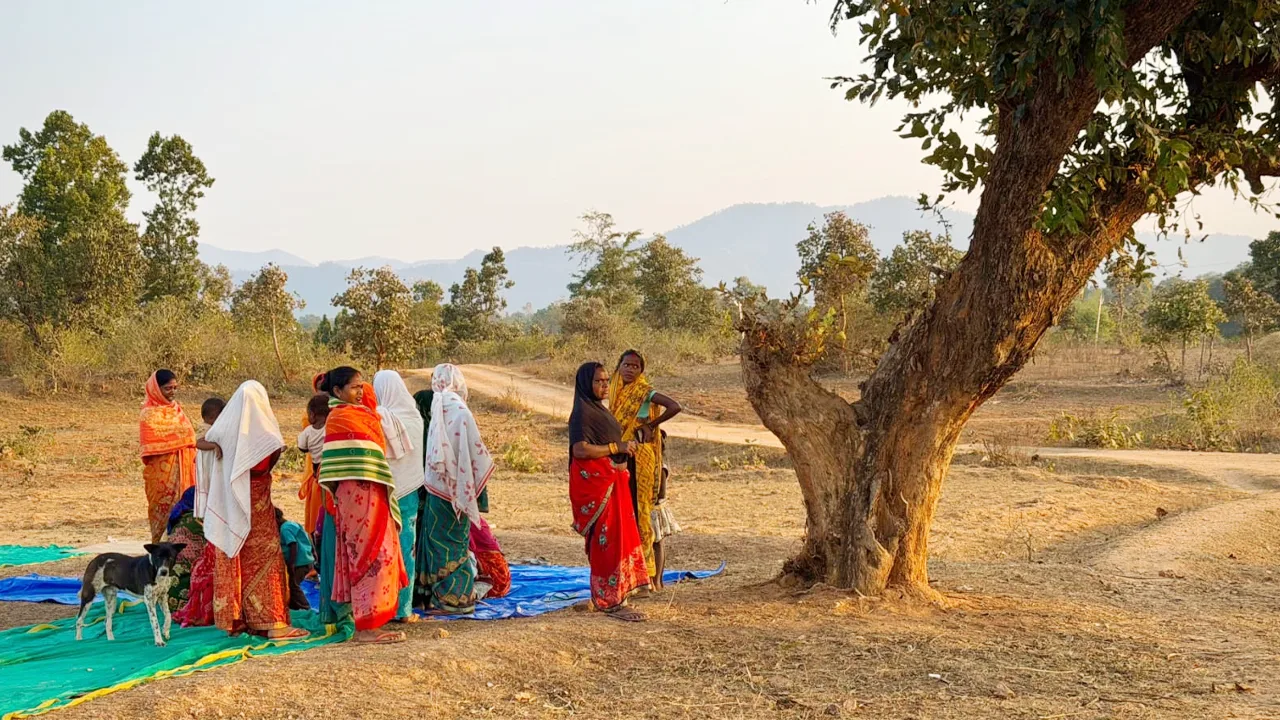
Twenty years after India recognised the “historical injustice” done to forest communities, the harder question remains: who controls the forests?
Nearly twenty years after the Forest Rights Act was passed, most discussions about it begin and end with implementation. How many claims have been filed, how many titles distributed, which states are doing better, which officials are obstructing claims, how many Community Forest Resource rights have been recognised? These are important questions. For people who have waited generations for their rights to be recognised, sometimes while living under the constant threat of eviction, those rights are hardly abstract matters. Yet something goes missing when the Forest Rights Act is reduced to an implementation problem.
The law did not suddenly arrive in 2006 because the Indian state discovered that forest dwellers had rights. It came out of a much older conflict over forests: who owns them, who uses them, who decides what happens inside them, and ultimately what a forest is for. The struggle that produced the law was therefore never simply a demand for land titles. It challenged a system of forest governance built during colonial rule and retained, remarkably intact, long after the British left.
The Forest Rights Act acknowledged this history in unusually candid language. Forest rights, its preamble said, had not been properly recorded during either the colonial period or independent India, resulting in a “historical injustice”. This was not a small admission. For more than a century, the forest administration had treated vast areas inhabited and used by people as government forests, while those same people could be classified as encroachers inside landscapes their communities had helped shape. The question is what happened after the state acknowledged the injustice.
How forests became government property
Indian forests were never empty. Nor were they timeless village republics living in perfect ecological harmony, as an older romantic literature sometimes suggested. Forest societies traded, cultivated, hunted, grazed animals, fought with neighbouring groups, produced surpluses, paid tribute and interacted with states and markets in extraordinarily diverse ways. Communities themselves were divided by caste, class, gender and power. What changed decisively under colonialism was the scale and legal character of state control.
Forests were mapped, classified and enclosed. Customary usage, where recognised at all, had to be translated into a form legible to the new administration. A community might remember a grazing route, a swidden cycle, a fishing place, a sacred grove or a seasonal source of food over generations; the forest settlement officer wanted documentary proof of a “right”. What could not be proved could disappear from the record. Once that happened, an old practice could become an offence.
This was more than a matter of law. Forests were being reorganised as productive assets of the colonial state. Timber moved to railway lines, shipyards, mines and towns; natural forests became commercial plantations; fire, grazing and shifting cultivation were suppressed where they interfered with forestry; communities were displaced, disciplined or recruited as labour.
The North Bengal forests offer an unusually stark example. Forest and taungya villages were established in part as labour settlements. People who had once lived from the forest in more autonomous ways could now remain there on condition that they worked for the Forest Department. Begar—compulsory unpaid labour—survived in places into the postcolonial period. Forests became valuable; forest labour, curiously enough, often did not.
Independent India inherited most of this administrative geography and, more importantly, much of its political imagination. The forest continued to be something managed from above. Policies changed; “participation” entered the official vocabulary; Joint Forest Management committees appeared. But the Forest Department remained the institution that decided what counted as a forest, who could use it and under what conditions.
By the beginning of this century the contradiction had become impossible to ignore. Millions of people living on forest land had never had their customary occupation recorded. In official files they could therefore appear as illegal occupants. The eviction drive that followed the Union environment ministry's May 2002 instructions brought this contradiction violently to light. Houses and crops were destroyed in several states. People who had lived in forests for generations suddenly confronted the full meaning of being an “encroacher” in law.[1]
What followed was a remarkable mobilisation.
A law born in struggle
Adivasi organisations, forest workers' movements and other popular formations came together in various coalitions, most visibly the Campaign for Survival and Dignity. The National Forum of Forest People and Forest Workers, with which many of us were then associated, was part of this larger political process, although organisations differed sharply over strategy, wording and what a future forest law should actually do. The immediate demand was protection from eviction. But the politics quickly went beyond that.
People demanded recognition of cultivated forest land and habitation, as well as rights over community forests, grazing areas, minor forest produce, water, traditional habitats, and the conversion of forest villages. There was a deeper argument beneath these demands: the forest bureaucracy could no longer retain unquestioned authority over landscapes inhabited and used by communities. This is why the Gram Sabha became so important.
The issue was not merely whether an individual family would receive a piece of paper recognising occupation of a plot. If the old forest regime had deprived communities of authority, then undoing that history required institutions through which people themselves could govern their forests.
The Forest Rights Act that finally emerged in December 2006 carried much of this politics inside it. It recognised a wide range of individual and community rights, Community Forest Resource rights, habitat rights, rights to convert forest villages, and powers and responsibilities of the Gram Sabha and rights holders to protect forests, wildlife and biodiversity. Measured against Indian forest legislation before it, this was extraordinary.
Yet a law is never identical to the movement that produces it.
During the drafting battle, one apparently small difference in language captured the problem. Movement drafts sought to make the Gram Sabha the body that would determine forest rights. In the enacted law, the Gram Sabha would instead initiate the process of determining them. Claims moved upward through Sub-Divisional and District Level Committees.
One word can sometimes contain a political history. The community was recognised, but the state retained an appellate and administrative architecture above it. Rights that had existed through use, memory and social practice now had to be claimed, mapped, verified and entered into official records.
There is nothing unusual about this; this is what laws do. Academics might call the process juridification. Less ceremoniously, it is what happens when a living political struggle enters forms, maps, evidence rules, committees, files and courts. There was no way around this entirely. Without law, a forest dweller facing eviction had little protection against the machinery of the state. The FRA created legal weapons where none had existed. The mistake is to imagine that because those weapons now exist, the political struggle that created them has ended.
When rights become statistics
By March 2026, around 54 lakh claims had been filed under the FRA, and about 25.4 lakh titles had been distributed. Individual titles account for the overwhelming majority; only about 1.24 lakh are recorded as community titles.[2] These figures tell us something, but considerably less than is usually assumed.
A title can secure a family from eviction, and that is no small achievement. A Community Forest Resource title can create an important legal foundation for democratic forest governance. Yet counting titles does not tell us who actually controls a forest.
Does a Gram Sabha decide whether trees will be felled? Can it stop a mining proposal? Does the Forest Department seek its permission before beginning operations? Can women who collect fuelwood and forest food participate equally in decisions? Can a community refuse a plantation project? Who controls revenue from forest produce? Who decides what conservation means? A statistic does not answer any of these.
The great irony of the post-FRA period is that while enormous political energy has gone into securing rights under the law, the forests themselves have simultaneously been opened to new claims from elsewhere.
Between 2014–15 and 2023–24 alone, the Union government approved the diversion of 173,396.87 hectares of forest land for non-forest purposes.[3] Roads, mines, transmission lines, dams, railways and other infrastructure continue to move through forest landscapes.
I am not suggesting that every hectare so diverted represents an FRA violation. That would be both inaccurate and unnecessary. The point is different: legal recognition of forest rights and the enclosure of forests are occurring simultaneously.
A village may spend years trying to have its Community Forest Resource recognised, while a proposal to divert the same or an adjoining forest passes through another arm of government. The two processes inhabit different administrative worlds, although on the ground they concern the same land. The result is a peculiar politics in which communities are continually asked to prove their rights, while capital and the state arrive with projects.
The new enclosures are sometimes green
Development is not the only pressure. Indian forest movements have long argued that conservation can also dispossess. This was once dismissed as an attack on wildlife protection. It should not be. Forest communities themselves have repeatedly protected forests and wildlife, often against commercial felling, poaching and destructive extraction.
The question is not whether tigers and forests should survive. Of course they should. The question is why conservation so often begins by treating the people already living in forests as the problem. The scale involved is significant. The National Tiger Conservation Authority's 2026 assessment reports that 97,786 families in 742 villages continue to live in core areas of tiger reserves.[4] Under the law, relocation from critical wildlife habitats is subject to stringent conditions, including settlement of rights and safeguards regarding consent and rehabilitation. Yet political and administrative pressure to create “inviolate” spaces persists.
This older conservation enclosure is now being joined by something newer: the climate and restoration economy. Forests have acquired values that colonial foresters could scarcely have imagined. Carbon is measured, traded and offset; degraded land becomes a site for compensatory plantation; tree planting becomes an environmental credit.
The Green Credit Programme is a particularly interesting example. Its current framework allows degraded forest lands registered by Forest Departments to be used for tree planting and ecological restoration, with Green Credits awarded to participating entities. The revised 2025 methodology permits such credits, under specified conditions, to be used for obligations including compensatory afforestation, corporate social responsibility and plantation requirements connected with project approvals.[5]
Planting trees sounds unobjectionable. Often it is beneficial. Yet anyone familiar with Indian forestry knows that a plantation and a forest are not the same thing. A forest is not merely a quantity of standing biomass. It contains food, medicine, water, grazing, insects, fish, dead wood, fungi, animals, sacred spaces, histories and routes of movement. It contains social relations.
A plantation can produce carbon and still destroy a commons. Once again, therefore, the relevant question is not simply whether a project is green or brown. It is: who decided, on whose land, for what purpose, and who gains control afterwards?
What happened when villages tried to govern
North Bengal is useful here precisely because the story is untidy. The forest movement that grew there from the late 1990s did not begin with the FRA, which did not yet exist. Forest villagers were struggling against a much older system in which their settlements remained legally and administratively subordinate to the Forest Department.
When the national forest-rights mobilisation gathered momentum, these local struggles joined it. The enactment of the FRA gave villagers a language they had not possessed earlier: Community Forest Resource, Gram Sabha authority, the right to protect and manage. In parts of Chilapata and neighbouring forests, villages did not wait indefinitely for the bureaucracy to recognise what the Act said was already vested in them. Gram Sabhas mapped customary forests, filed claims, put up boards, maintained records and began patrolling. In some places they stopped clear-felling operations. They challenged illegal extraction of timber, sand and boulders and watched for poaching.
This is where the rather abstract word “commons” begins to acquire meaning. A commons is not created because a government issues a title saying “community forest”. It exists when people act collectively to maintain something they share; when rules are negotiated and observed; when members spend time patrolling a forest instead of earning a day's wage elsewhere; when disputes over use are dealt with; when somebody who could privately profit from felling a tree accepts that the tree is not simply his to sell.
The FRA mattered enormously in these places. Officials could no longer dismiss villagers quite so easily as illegal occupants. A Gram Sabha confronting a Forest Department officer could now cite an Act of Parliament. But the law did not do the patrolling. It did not attend the meetings. It did not settle conflicts. It did not compensate a villager for the day's wage lost while protecting the forest. Nor did it eliminate the Forest Department.
Old Joint Forest Management structures returned. Development funds could be used to reward compliant local groups. Contractors and party networks entered village politics. Officials found new ways of negotiating with selected leaders rather than with Gram Sabhas. There were internal problems too, and it would be dishonest to pretend otherwise. Money could create factions. Local leaders could become unaccountable. Institutions that had been democratic during the height of mobilisation could weaken when movements receded.
This brings us to an uncomfortable but necessary question.
Is “the community” always democratic?
No. We did not struggle against the bureaucratic myth that forest dwellers were encroachers in order to replace it with another myth—that every community is naturally democratic, egalitarian and ecologically wise. Villages contain power. Caste does not disappear at the forest boundary. Nor does patriarchy. Neither does class. A comparatively wealthy household with cattle may view a grazing commons differently from a landless family. A trader may see timber where another person sees fuelwood, food and shade. Men and women may use the same forest in completely different ways. Party politics, migration, consumer goods and commercial markets do not hover outside the village waiting for permission to enter.
This is why simply transferring authority from “state” to “community” cannot by itself reproduce a commons. Umar Khalid's recent book, Fractured Communities, is useful in this context because it precisely rejects the homogenisation of Adivasi society. Communities change internally, and the state and capital do not act only upon them from outside; their social relations can be reproduced inside them as well.
Anyone who has worked with forest movements knows this in practice. A Gram Sabha can resist a mining company. It can also be captured. A community can conserve a forest. It can also decide to sell what can be sold. Neither possibility proves that state forestry is preferable. It tells us something harder: democratic control is a political process, not a legal category. Commons survive through commoning.
So what is the FRA for?
None of this is an argument against the Forest Rights Act. Quite the opposite.
It remains, perhaps, the most democratic forest legislation that independent India has produced. Without it, millions of people would be substantially more vulnerable to eviction and administrative violence. It has legitimised claims that the forest bureaucracy denied for generations. It has created political and legal openings whose significance should not be underestimated.
That is exactly why it must not be reduced to a title-distribution scheme. The more interesting possibilities inside the FRA concern authority: Community Forest Resources, habitat rights, the conversion of forest villages, the powers of the Gram Sabha, and the recognition that people living in forests are not merely beneficiaries of government schemes but political subjects capable of governing landscapes. The language of “implementation” is too small for this.
If an official fails to process a claim, implementation has failed. But what do we call it when the claim is recognised, and the forest is subsequently handed over for mining? Or when a Gram Sabha receives a title but a Forest Department committee continues to control management funds? Or when conservation policy presses a village towards relocation? Or when a forest becomes land for a carbon or plantation project designed somewhere else?
These are not implementation gaps. They are conflicts over power. Twenty years after the FRA, perhaps the most useful thing forest movements can do is recover this distinction. The objective was never simply to enter the law. It was to change relations inside forests.
Sometimes law helps us do that. Sometimes the same state that recognises a right undermines it through another law, policy, project or institution. And sometimes the danger comes not directly from the state but from capital, markets, and inequalities operating through communities themselves. There will therefore be no final legal settlement of the forest question.
The commons will survive, where they survive, because people continue to produce them: through institutions, political organisation, argument, resistance, conservation and the everyday labour of sharing a landscape. The Forest Rights Act gives that process an unusually powerful legal foothold. It was never meant to be the destination.
Endnotes and source links
For the historical background to the 2002 eviction crisis and the institutional history that preceded the FRA, see Springate-Baginski et al., Redressing “Historical Injustice” through the Indian Forest Rights Act 2006. UK government research archive The text of the FRA, including Parliament's acknowledgement of “historical injustice”, is available here: Forest Rights Act, 2006
Ministry of Tribal Affairs, Government of India, FRA Monthly Progress Reports, including March 2026. Ministry of Tribal Affairs FRA portal
Ministry of Environment, Forest and Climate Change, Lok Sabha Starred Question No. 333, answered 24 March 2025. The official figure for forest land approved for diversion during 2014–15 to 2023–24 is 173,396.87 hectares. Lok Sabha answer and state-wise data
The NTCA's STRIDES 2026 assessment records 97,786 families remaining in 742 villages within critical tiger habitats. Summary of STRIDES 2026 findings
The Green Credit Programme is administered by the Ministry of Environment, Forest and Climate Change and ICFRE. Official Green Credit Programme portal The government confirmed in March 2026 that the tree-plantation methodology had been revised on 29 August 2025. Government statement on the Green Credit Programme
Bibliography
Asher, Manshi. “Evolution of the Forest Rights Act: A Historical Perspective.” The Indian Journal of Social Work, 2019.
Banerjee, Ajit, Soumitra Ghosh and Oliver Springate-Baginski. Obstructed Access to Forest Justice in West Bengal: State Violations in the Mis-Implementation of the Forest Rights Act 2006. IPPG Discussion Paper, 2010.
Caffentzis, George and Silvia Federici. “Commons Against and Beyond Capitalism.” Community Development Journal, 2014.
Gadgil, Madhav and Ramachandra Guha. This Fissured Land: An Ecological History of India. Oxford University Press, 1992.
Ghosh, Soumitra. “Selling Nature: The Case of Forest Villages of Northern Bengal,” in Kanchi Kohli and Manju Menon, eds., Business Interests and the Environmental Crisis. Sage, 2016.
Guha, Ramachandra. The Unquiet Woods. Oxford University Press.
Khalid, Umar. Fractured Communities. Juggernaut, 2026.
Lele, Sharachchandra and Ajit Menon, eds. Democratizing Forest Governance in India. Oxford University Press, 2014.
Sarin, Madhu. “Undoing Historical Injustice: Reclaiming Citizenship Rights and Democratic Forest Governance through the Forest Rights Act,” in Lele and Menon, Democratizing Forest Governance in India, 2014.
Sivaramakrishnan, K. Modern Forests: Statemaking and Environmental Change in Colonial Eastern India. Stanford University Press, 1999.
Springate-Baginski, Oliver et al. Redressing “Historical Injustice” through the Indian Forest Rights Act 2006: A Historical Institutional Analysis of Contemporary Forest Rights Reform. IPPG Discussion Paper 27, 2009.
(To Be Continued.)
Photo: Anitesh Chakraborty