
Brazilian Politics at a Crossroads
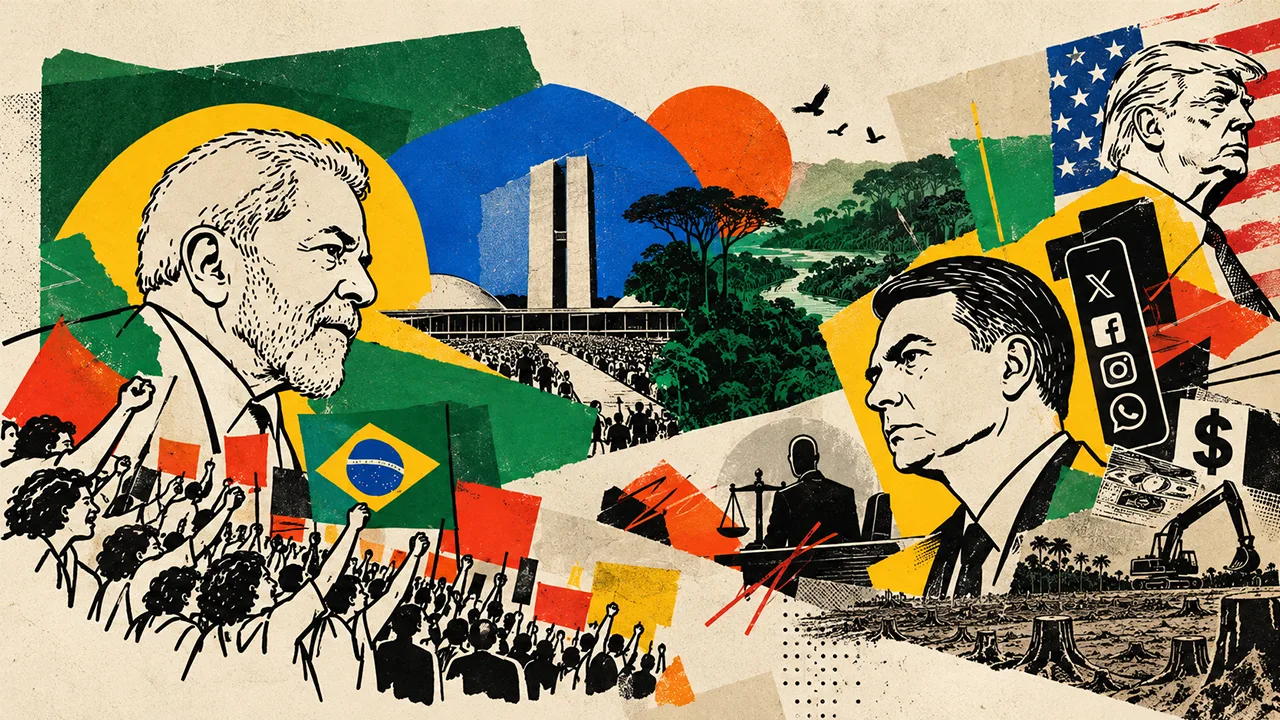
Written as Brazil entered the decisive second round of its presidential election, this article captures a country divided by fear, hope and conviction. Flávio Bolsonaro had led the first round, while progressive forces rallied behind Luiz Inácio Lula da Silva. Reporting from Brazil, Winnie Overbeek examines the tensions and mobilisation shaping the contest. Within hours of publication on 25 October, Lula was declared the winner. The election settled who would govern, but not the questions of democracy, inequality and power.
Backdrop
Before the first round of the presidential election in Brazil on October 4, polls indicated an easy win for Luiz Inacio Lula da Silva. But when the result of the first round was announced, the left-progressive, anti-fascist, democratic forces were shocked to see rightwing senator Flavio Bolsonaro, son of former Brazilian President Jair Bolsonaro (2019-22), topping it by almost 2 per cent votes (a result in total contrast to the polls). How was that possible? There is a strong feeling among left-progressive and democratic forces that the ballots were manipulated.
Although there is speculation on the result of the second round, scheduled for October 25, there is little doubt that the Bolsonaro clan had for long been preparing for this election, much more than Lula and the Workers’ Party (Partido dos Trabalhadores — PT). Flavio Bolsonaro has been closely collaborating with the Donald Trump administration, the CIA, and Big Tech such as Meta (formerly Facebook Inc.) for a long time in a desperate bid to win this election. As part of their plan, the Bolsonaro clan succeeded in getting a pro-Bolsonaro judge to lead the Supreme Election Court. For example, the judge is excessively tolerant of the “tsunami” of fake news generated by the Bolsonaro clan. On the other hand, he is extremely restrictive when it comes to Lula’s communication with the electorate on social media platforms. True, the Lula camp’s content too has some fake news, but in the pro-Bolsonaro judge’s view almost every campaign material of Lula and his team is essentially fake news.
What the Lula camp is most worried about, however, is not fake news, but truth: that Flavio Bolsonaro, like his father, has fascist tendencies, and is blatantly pro-rich and pro US, and, as a result, he will offer Brazil’s natural resources to the US, as well as compromise or destroy the public education and health systems, do away with the pro-women policies in a country which has one of the highest femicide rates in the world. Also, Bolsonaro, like his father, will further destroy the Amazon because for him climate change is not a reality. In essence, he will destroy Brazil’s democratic fabric and environment.
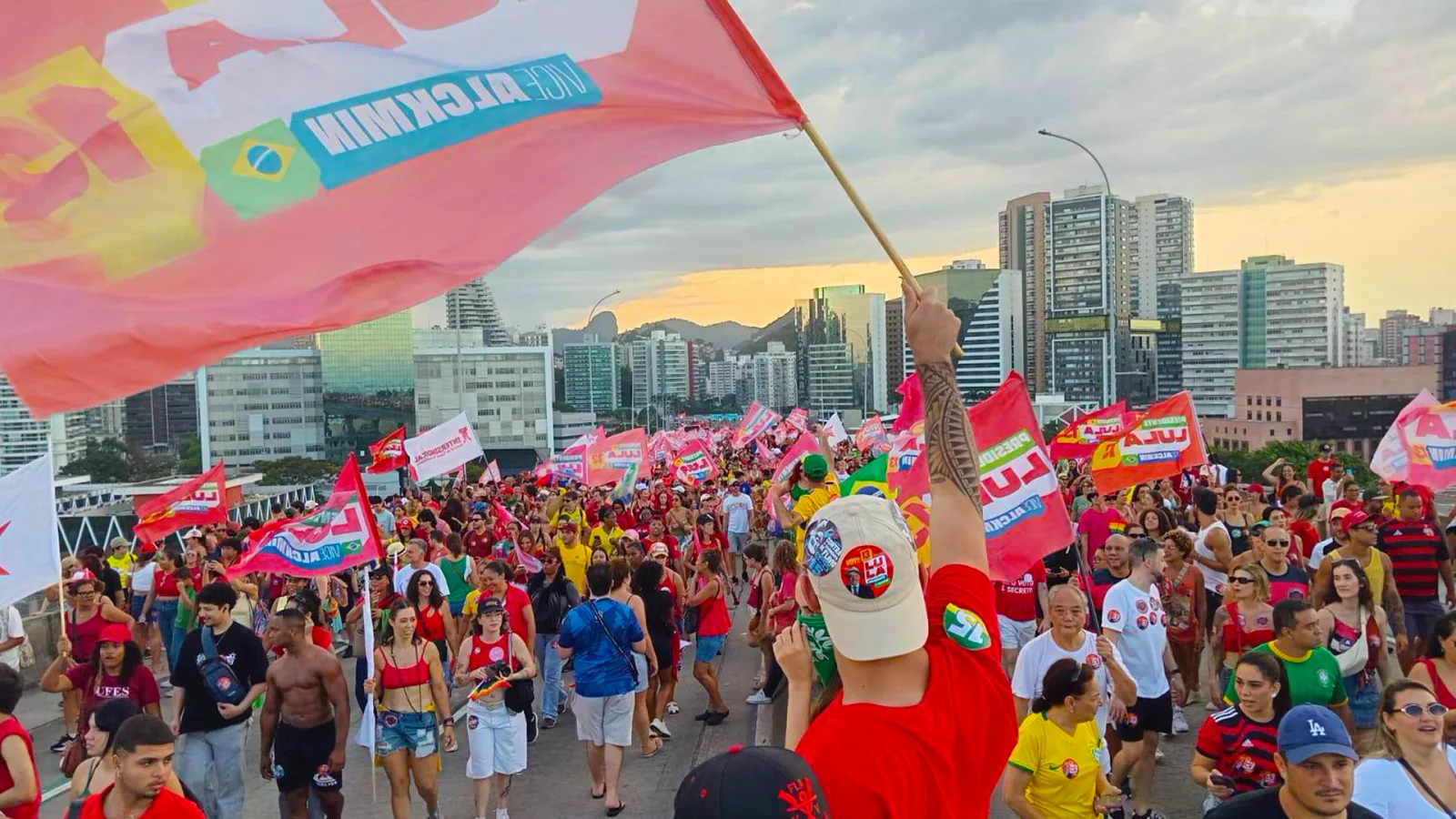
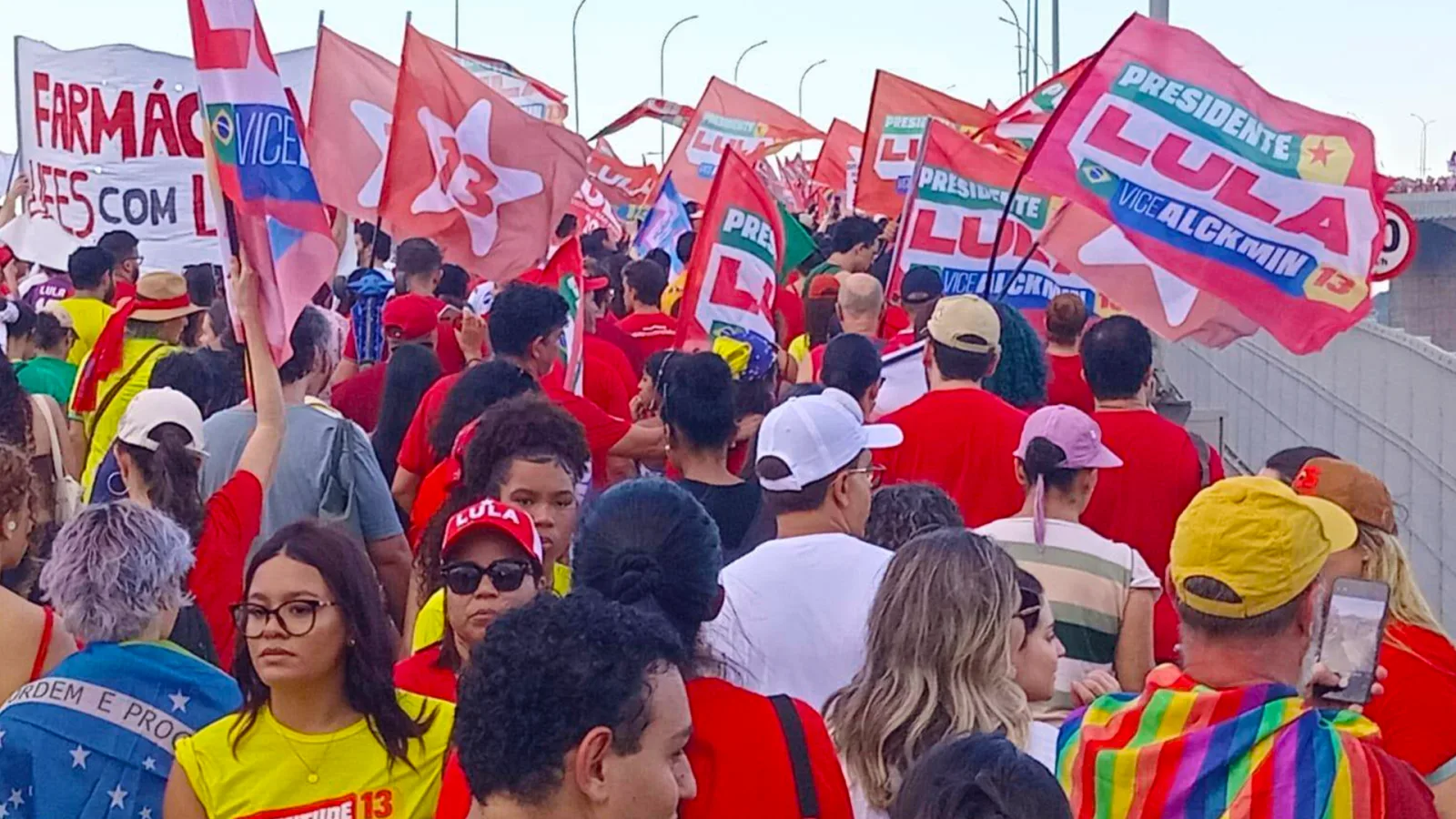
After the shock of the first round, the left wing (from the extreme left to progressive forces) decided to form an anti-Bolsonaro, anti-fascist front. The result: Brazil has seen massive demonstrations in the run-up to the second round. For instance, about 1 million people took to the main thoroughfare (Avenida Paulista) of Brazil’s largest city, Sao Paulo, in support of Lula. In the area that I live in, in the city of Vitória located in the state of Espirito Santo, we could mobilise only about 3,000 people, that too after considerable efforts, to protest the parliamentary coup against President Dilma Rousseff of the PT in 2016. But this time, we succeeded in bringing together at least 20,000 people in the first mobilisation after the first round. A large percentage of the demonstrators this time are students and secondary school students, because they are afraid that if Bolsonaro wins the election, he will deny many of them access to universities in the future. Lula and his tem have finally realised that if they do not use the Bolsonaro clan’s strategy of massive campaigning through social media platforms, they might lose not only the election but also their future. Hence, some social media experts organised the “army of Lula”, a platform which already has 5 million followers, which has been working round the clock to further the cause of democracy. But with strict restrictions imposed by the Supreme Election Court on the Lula campaign team’s use of social media platforms, the “army of Lula” has finally realised that interacting with people on the streets, and with neighbours, is extremely important.
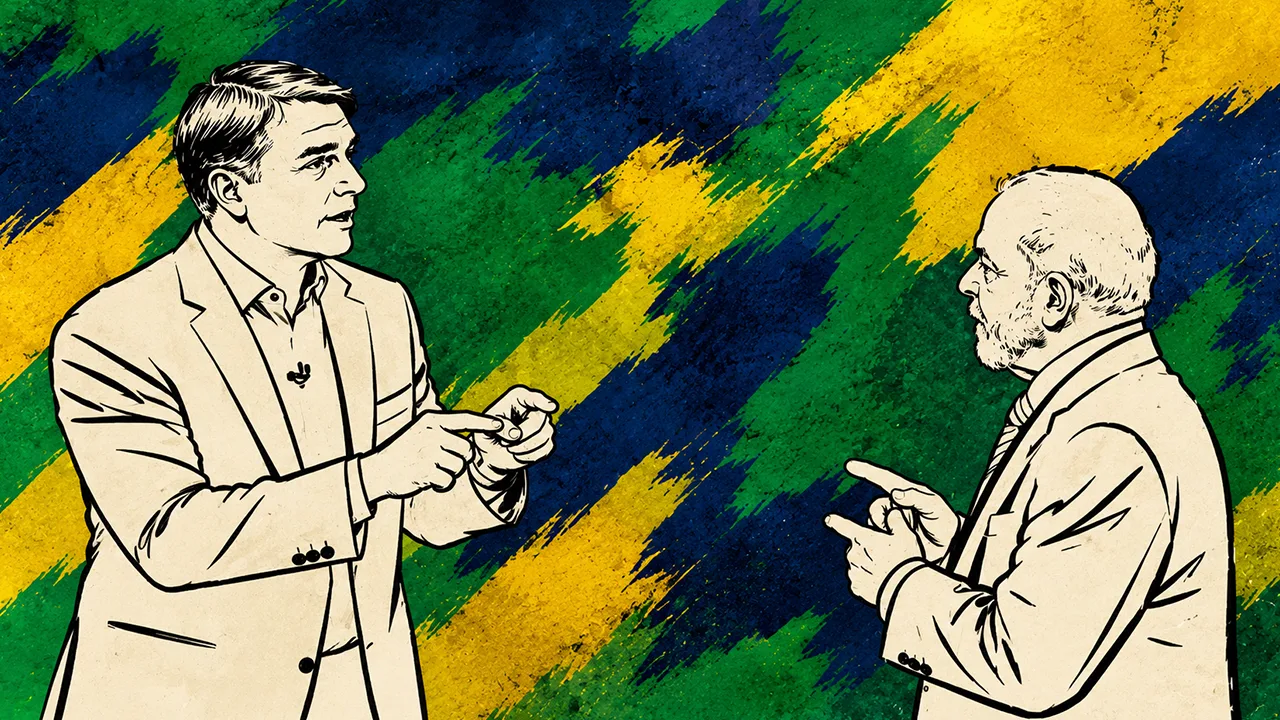
The difficult part is to convince members of the working class, who have been spreading the Bolsonaro clan’s evil narrative, that Flavio Bolsonaro’s victory would condemn them to perform backbreaking labour without any benefit. How could they defend someone who will likely make their lives even more difficult? Perhaps Lula’s pro-capitalist policies, which benefit the rich (bankers were never richer than under Lula), is to blame for a large number of workers supporting Bolsonaro (Jr.). Although the Lula government has raised the minimum salary, prices of essentials including meat (a staple in Brazil) have skyrocketed.
Incidentally, Lula had promised the opposite before being elected president for the third time. The other problem is the fast-spreading culture of violence in Brazil, and the way all mainstream media outlets (mostly extreme right) report about that. They have been criticising Lula but ignoring the fact that Flavio Bolsonaro is part of organised crime, in particular, he patronises “militias” comprising a private army of former police and army officers, and has been making money from the violence that started in his home town (Rio de Janeiro), blackmailing people into submission, and offering to provide them with “security”. The Bolsonaro clan has no interest in stopping the violence. And yet the mainstream media do not even discuss the issue with the aggrieved.
Another aspect of people’s mobilisation in support of Lula which makes us a bit optimistic is that irrespective of who wins the election, the parliament, despite being dominated by rightwing forces, passed a law this week, on public demand, to reduce the working week from 6 to 5 days. This is minor victory for the working class, especially because the rightwing forces (now absorbed by the Bolsonaro clan) had been refusing to accept the workers’ demand.
If Flavio Bolsonaro wins, he will reverse the modest progress that democracy has made in Brazil in the post-military regime, especially since the implementation of the new constitution. As a matter of fact, Bolsonaro (Jr.) wants to change the constitution again in order to make Brazil, in his words, “democratic again”. This suggests he will reverse the little progress the country has made in terms of social security and wage increase for workers during Lula’s tenures. This also suggests Trump and his gang will enjoy total domination of Latin America, and therefore will find it easier to re-establish the so-called Monroe Doctrine of the United States.
Presidential election
When Lula won the presidential election for the first time, in 2002, it was thanks to the social movements rooted in the struggle for democracy and social justice during the military dictatorship (1964-85). Basically, all the movements in their early days demanded radical changes in the country and called for building a socialist country to overcome structural inequalities and social injustice.
In fact, some of the policies the Workers Party (PT) government came up with from 2003 onwards during four presidential terms — three with Lula and one with Dilma Rousseff — can be called groundbreaking. For instance, for the first time in history, public universities were compelled to earmark half of their seats for students from poor families, most often black people and women, in a profoundly racist and patriarchal society. Also, the governments under Lula and Dilma Rousseff ensured that small-scale farmers, rather than multinational companies, supplied food to the public school kitchens at a fair price so that schoolchildren could get healthy meals for free.
However, what divided the left-wing forces and forced many of them to abandon the Workers Party was the government’s adoption of a so-called neo-development model, based on continuous and expanded capitalist-oriented “extractivism”, supposedly to provide more benefits for the poor, as its main economic policy. Based on a letter released well before the 2002 elections, in which Lula promised to respect all contracts related to the Brazilian government’s stratospheric debt burden, private banks and investors succeeded in making humungous profits under successive PT governments. The governments of Lula and Dilma Rousseff also didn’t carry out agrarian land reform — and were supported by the Brazilian agribusiness sector for that. The flawed policy, not surprisingly, devastated the Amazon and Savannah (cerrado). The environmental and ecological damage caused was extremely severe, especially because the PT governments built the most impactful hydropower dam in the Amazon, Belo Monte, which even the military regime (1964-85) had abandoned in the face of massive protests by the Indigenous Peoples. Ignoring the lessons of the past, the Lula government even planned to extract oil in the Amazon.
But now that Lula is running for a 4th term as President — the first candidate to do so since the struggle for direct elections in the 1980s — Brazil’s progressive and left-wing forces have reunited like never before. The reason: on October 4, contrary to all the poll results, Flavio Bolsonaro won the first round of the presidential election. His father, Jair Bolsonaro, is serving a 27-year sentence for attempting a military coup in 2022 after losing the presidential election, and planning to assassinate Lula and other leaders. All those who have taken to the streets know Bolsonaro (Jr.), if elected, will liquidate, with not so tacit help of the Trump administration, the little democracy they have succeeded in restoring in Brazil. They also know he, as a representative of an authoritarian and fascist government, will willingly hand over Brazil’s rich natural resources, including rare earths, to Trump. To make matters worse, the Brazilian parliament is dominated by rightwing and extreme rightwing forces, which at least Lula will try to counter.
After the first round’s shocking result, all the progressive and left-wing forces have woken up to the fact that Lula winning the second round is essential to saving democracy in Brazil, and safeguarding the country’s sovereignty. With the students as the vanguard, people have taken to the streets across Brazil. After the first but massive student protest in Rio de Janeiro, the first big mobilisation organised in just one day saw about 1 million people take to São Paulo’s Avenida Paulista, the financial centre of the country. The “army of Lula” platform was quickly set up, bringing together about 5 million people online, which has remained the domain of the extreme-right wing. The “army of Lula” is starting to make a difference on social media networks, despite attempts by the right-wing-controlled Supreme Election Court to censor it.
People are rising up across Brazil in opposition to the bigotry and hatred that the Bolsonaro father and son duo represent, as well as to remind Lula and his fellow PT leaders that they came to power in the first place on a mandate that was largely democratic and anti-capitalist. People are protesting on streets despite Meta and other Big Tech companies’ proven partiality and wild attempts to manipulate the people (which incidentally is not a phenomenon confined to Brazil), and despite the dirty strategy of extreme-rightwing forces worldwide to topple governments or capture power by subterfuge.
Nevertheless, the massive mobilisation of people forced even Flavio Bolsonaro to support a vote in the Senate in favour of the working class’s demand for a reduced working week without any reduction in salary. Bolsonaro (Jr.) voted in favour in spite of having repeatedly refused to back the demand earlier. That was a big and unexpected victory for Lula. Another impact of people’s mobilisation is that the 6 per cent lead Bolsonaro (Jr.) enjoyed over Lula in the first polls after the first round has now been reduced to zero — the last polls before the second round show “technical draw”.
Whether the efforts to mobilise millions of people will be enough for Lula to win the second round remains to be seen. But if Lula wins the election, will he and his fellow PT leaders, who incidentally think of the people only during election time, regularly interact with the common people? If so, will they again bet on safeguarding the interests of Brazilian elites to ensure so-called governability? Or will they now heed the message emerging from the streets, and start implementing policies to improve the lives and livelihoods of the people? And will they be able to convince the ordinary people to vote for them and not for the authoritarian forces out to destroy democracy?
If the fascists win the election?
The left and progressive forces, led by the youth, have reclaimed the streets since losing them in 2013, when the fascist wave started in Brazil. The Lula campaign, devoid of financial heft, is (finally) fighting the political battle on social media networks. People are talking to neighbours, friends, colleagues and others about Brazil´s political future and the looming threat to democracy. Whatever the result of the second round, the re-organisation of the left will not stop on October 25, and that is the most important thing. Let’s not lose hope yet.