
People of the 'Unruly' City: Kolkata’s Hawker Movement, the State and the Politics of Livelihood : Part-1
(Translated into English from Original Bengali Text)
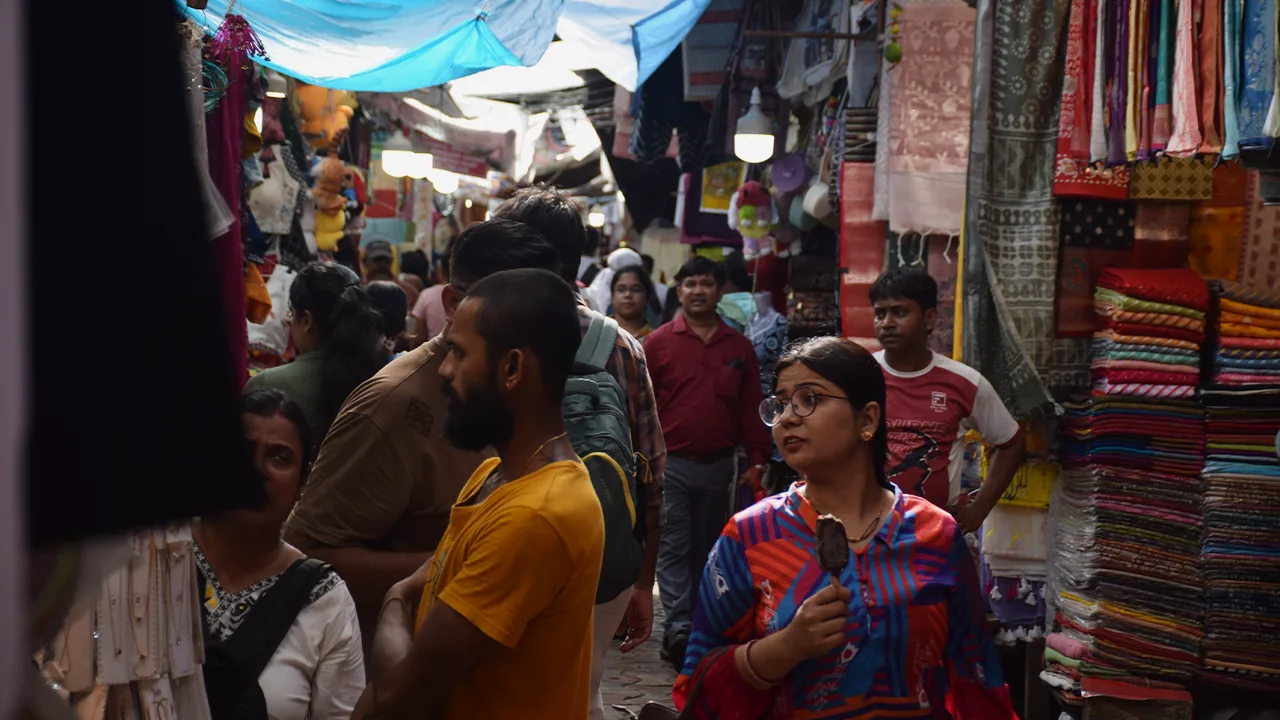
When we sit down to talk about Kolkata’s hawkers, a familiar picture immediately comes to mind. The pavements have been taken over. Walking has become difficult. The roads have narrowed. Traffic is worse. The city looks dirty. And then, quite naturally, comes the question: aren’t pavements meant for walking?
Of course, they are.
But if our discussion of hawkers begins and ends with that question, we will not really understand Kolkata’s hawkers. In fact, we will not understand Kolkata itself. This city is made as much by its pavements, open grounds, bustees, settlements beside railway lines, temporary markets, tea stalls, rickshaws, handcarts and the livelihoods of ordinary people as it is by its planned roads, flyovers, markets, houses, offices, parks, train routes and government buildings.
What we so easily call ‘unruly’ or ‘messy’ has a deep social logic of its own.
And hawkers choose spaces where they find buyers. Markets grow where goods can be sold. Settlements grow where people find a place to stay. People shift to places where there is a chance of finding work. Social ties form where people can depend on one another. State planning often does not create this life in advance. People fill the gaps in planning out of necessity.
So it is a mistake to see a hawker simply as someone occupying a stretch of pavement. The hawker is the visible part of a much larger economic and social arrangement. Behind her are small producers, petty traders, transport workers, bustee dwellers, daily-wage earners, low-income buyers and countless others whose livelihoods are not made inside gleaming offices.
To remove a hawker, then, is not simply to move one seller from one place to another. Quite often, an entire set of economic relationships begins to break apart with that removal.
To understand this, we need to back a little — to an older Kolkata.
My childhood markets
The Kolkata I grew up knowing did not think of a market as necessarily meaning a permanent, built market.
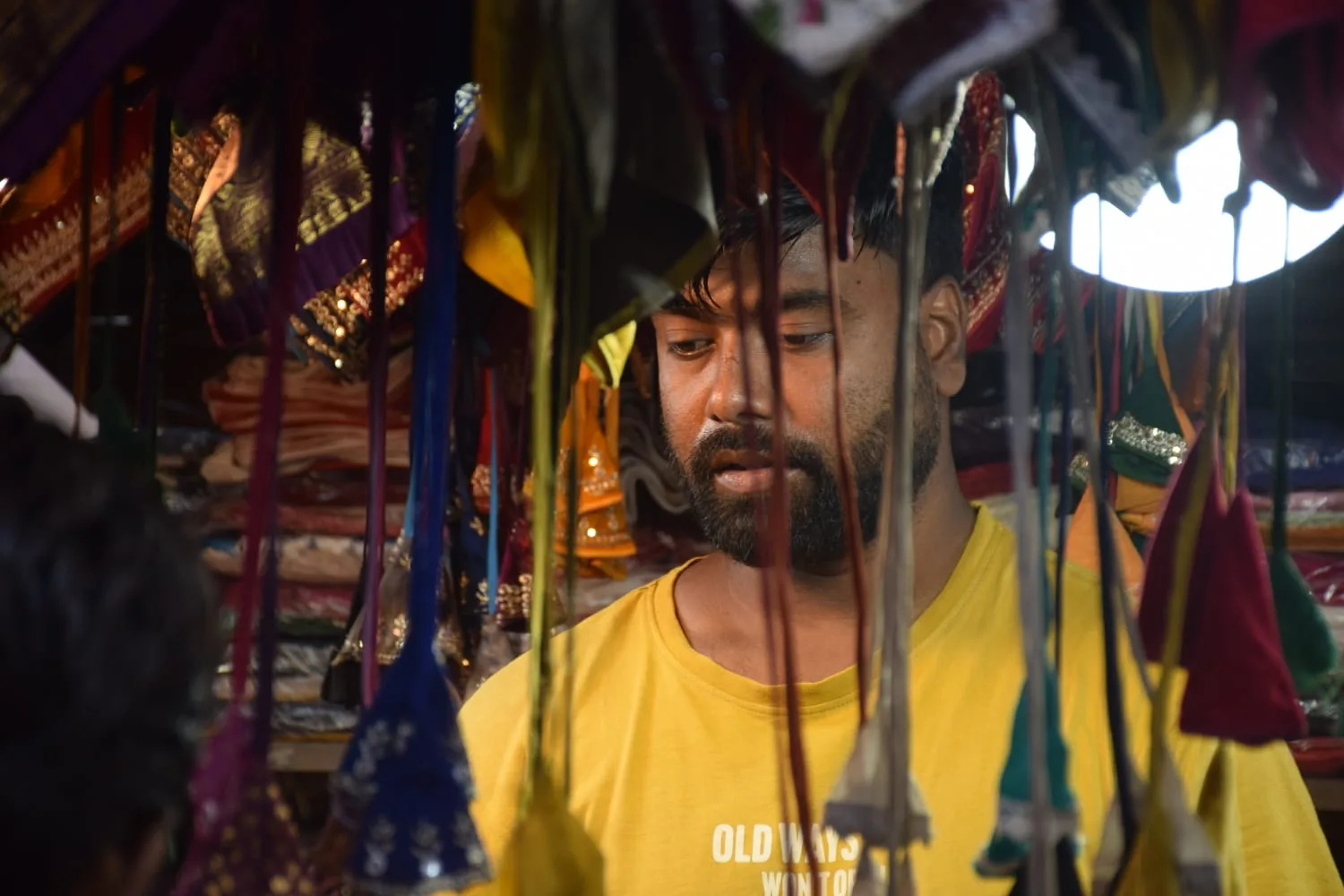
Particularly in refugee-majority neighbourhoods, in many parts of south Kolkata, in the suburbs, and in the northern suburbs, markets would come up on roads, open grounds, and pavements. A market would come up in the morning. A few hours later it would be gone. By afternoon, there might be no trace of it. The ground was clear. Children were playing there. The next day, perhaps at another hour, the market would return.
Nobody found this especially strange. Why was a market there? Because people had to buy necessities. They had to buy food. Sellers had to sell. Somewhere between those two needs, a place was made.
The old markets of north Kolkata have a different history. There were planned markets. Permanent markets. Markets built through private initiative. There was designated land. There were structures.
But not all of Kolkata was built the same way.
After Partition, when vast refugee settlements emerged, where was the infrastructure for planned markets? In the new settlements of south Kolkata, across the northern suburbs, along BT Road, around the railway settlements spreading out from Sealdah, towards Howrah, across the river — people made markets for themselves, according to the demands of everyday life.
A market came up in the morning. By afternoon the same place was used for something else. In some places a market occupied a field; after it dispersed, boys came out to play there. The city seemed able to do many things at once.
Seen through today’s eyes, this may look disorderly. At the time it was simply part of the ordinary rhythm of life.
There is another thing here that matters very much.
A market was not only an economic relationship. Social relationships grew there too.
I go to the market. I buy fish. I know the fish seller. I call him by name. He knows me. I have not been to the market for several days. He asks, “You haven’t come for a while. What happened?”
I say, “I wasn’t keeping well.”
He might say, “There’s good fish today.”
It is difficult to explain this in the language of an economics textbook. There, the relationship between buyer and seller can be described as one of supply and demand. But in the life of the city, there was more to it than that.
There was familiarity.
There was trust.
There was habit.
There was the neighbourhood.
There was the simple act of asking after someone.
A seller knew who lived in which house. A buyer knew which seller had the better fish or vegetables. If someone did not appear for a few days, people asked what had happened.
The market, in other words, was also a social institution.
You cannot understand these relationships through money alone.
The economy of a refugee city
The history of Kolkata’s hawker economy cannot be separated from the history of Partition.
After 1947, very large numbers of people arrived in West Bengal from East Bengal. The state could not give all of them jobs. It could not provide everyone with a permanent home. It could not give everyone a shop. It could not build planned markets and allot a stall to every newcomer.
So what did people do?
They made their own roads into the city.
Some began small businesses. Some became hawkers. Some pulled rickshaws. Some found work in factories. Some became part of the transport system. Some began making small things at home. Some sold whatever they could on pavements.
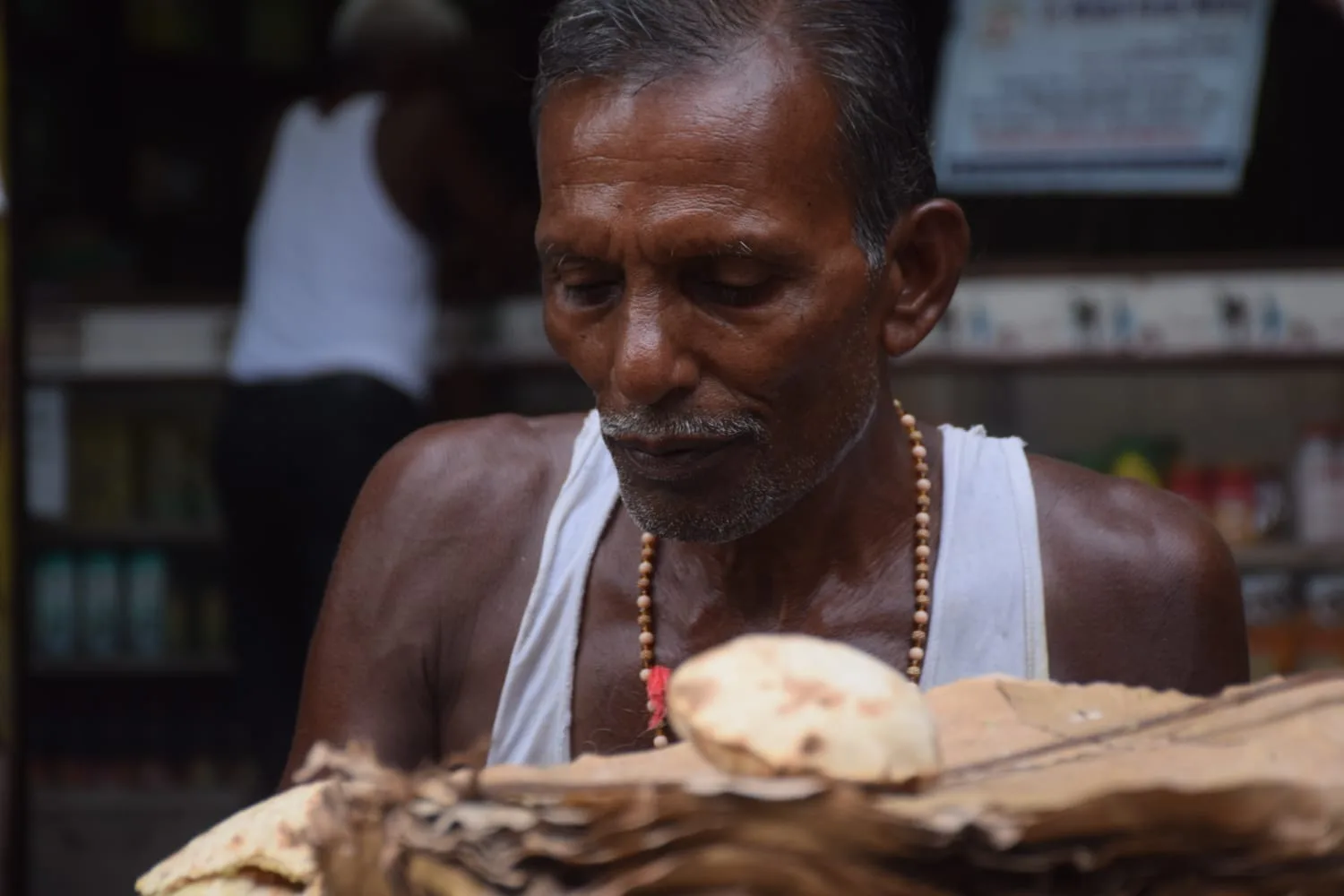
I remember the Haringhata milk booths set up for refugee women. In Kolkata of yore, many of these milk stalls were set up on pavements. Women from refugee colonies worked there.
It would be a mistake to see this only as a history of selling milk.
It is also a history of the social reconstruction of refugee women’s lives.
A woman who had lived in one social world in East Bengal suddenly had to find a livelihood in a new city after Partition. The state gave her one kind of employment. But the place from which she worked was the pavement.
So the pavement here is not merely “encroached government land”. It is also part of the history of state rehabilitation and employment.
The same is true of the public bus system. A large number of refugees entered the transport economy — as drivers, conductors, mechanics, in different kinds of work.
Here history, geography, economics and administration cannot be pulled apart from one another.
Partition has displaced a person.
He comes to Kolkata.
He builds a new settlement.
He needs work.
He creates a market.
He needs transport.
He needs a pavement.
He needs a school.
He needs a shop.
One thread becomes tangled with another.
Cut one thread in this weave and the whole fabric trembles.
The politics of the word ‘unruly’
Today we say very easily that Kolkata is disorderly.
There are hawkers.
There are bustees.
There are shops on the road.
There are rickshaws.
People occupy pavements.
People sleep in parks.
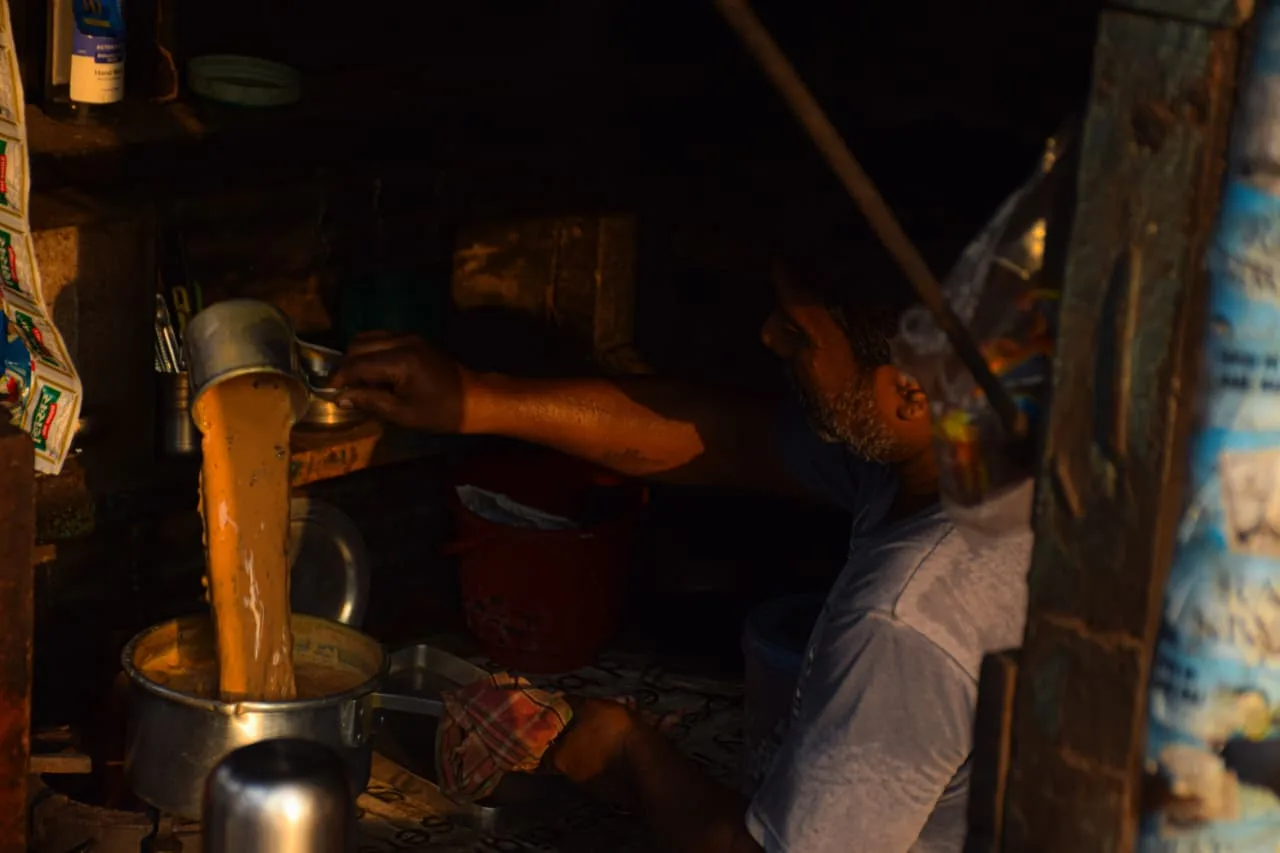
The roadside sells tea.
Everything begins to look like a problem.
But we need to ask a question.
Disorderly to whom?
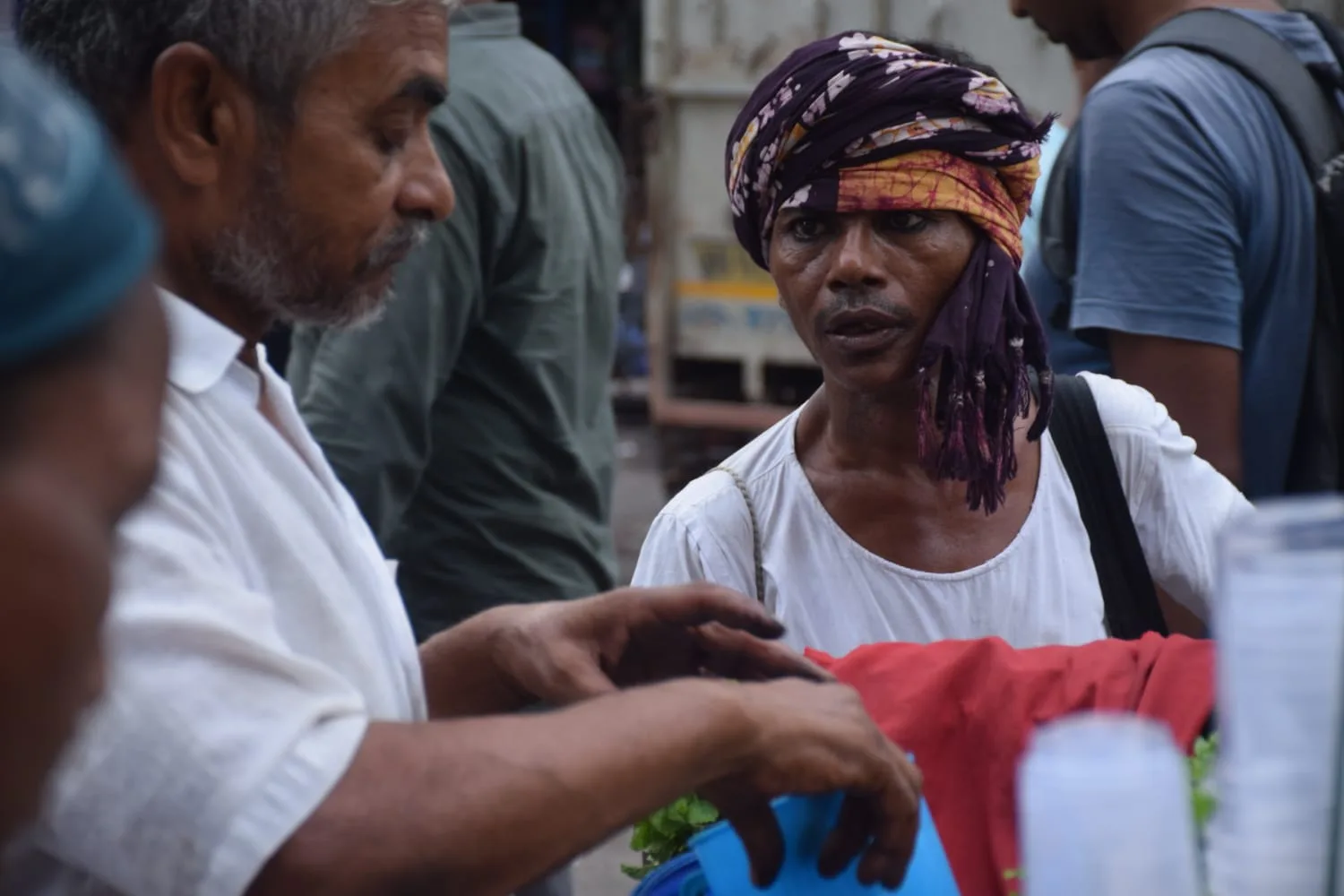
To an urban planner, ten shops on a pavement may be “encroachment”. To the worker who buys a cheap meal from one of those shops before going to work, it is a market.
To the woman who buys vegetables from a hawker before catching her train, it is a convenience she depends on.
To the small producer who cannot get goods into a big shop, the hawker is the market.
To a bustee dweller who needs clothes, vegetables, fish and cooking utensils at prices within reach, the hawker market is the market they can afford.
So the word ‘unruly’ can carry a class gaze.
What is disorder to one person may be the arrangement through which another person survives.
That difference is what we have to understand.
When the city becomes a commodity
There was a time when a city was thought of, above all, as a place where people lived.
Then, gradually, the tendency grew to treat the city as an economic asset.
With globalisation, that shift became much stronger.
The pavement became an ‘urban asset’.
The road became ‘infrastructure’.
The park became ‘public property’.
The market became ‘commercial space’.
Every place began to acquire a fixed ownership, a fixed use and a fixed set of rules.
With urban development programmes such as the Jawaharlal Nehru National Urban Renewal Mission, the idea of the planned, regulated ‘modern’ city became even more powerful.
The city must be beautified.
The city must be modernised.
The city must meet international standards.
The city must be cleaned up.
None of these phrases sounds objectionable. They sound attractive, in fact.
But the question is: where, in this modern city, is the poor person supposed to be?
If beautifying the city requires removing the very person whose labour keeps the city running every day, what exactly does that beauty mean?
There can be a giant shopping mall, but not a hawker on the pavement — why?
There can be a corporate office, but not a small tea stall — why?
There can be land worth crores upon crores of rupees, but a man with a handcart cannot find a few feet of space to stand — why?
A particular idea of modernity is at work here. Visible poverty is treated as a defect in the city.
Poverty is not removed. Poor people are removed from sight.
Operation Sunshine: a turning point
Operation Sunshine (1996) was a major turning point in the history of hawker eviction in Kolkata.
Under the Left Front government, the drive triggered a major debate on public space, hawkers’ rights and urban planning.
The Left government’s role has to be criticised. There can be no avoiding the questions raised by the assault on livelihoods, the use of administrative force and the manner in which the eviction was carried out.
But if we see the whole episode only as one political party’s mistake, we miss a larger change.
There was a change in the very idea of the city.
The city had to be put in order.
Public space had to be controlled.
The pavement had to be restricted to a prescribed use.
The road had to be regulated.
The hours in which parks could be used had to be fixed.
Every space in the city had to be brought within administrative rules.
This is where the hawker movement acquires its deeper political meaning.
It is not only a fight against eviction.
It is a clash between two different ideas of a city.
One says: the city has to be brought under the rule of law.
The other says: the rules of a city also grow out of the lives people actually live.
Is the street only for walking and driving?
This sounds like a very ordinary question.
But if we look at Kolkata’s political and cultural history, the answer becomes much more complicated.
The political experience of the 1970s taught us that the street is not only a corridor for movement.
Meetings take place on the street.
Marches are organised on the street.
Songs are sung on the street.
Plays are staged on the street.
Sit-ins are held on the street.
People meet one another on the street.
The street is a social ground.
There was a time when you could perform a play on the street. You could sing there. You could hold a meeting there. Different uses could coexist in the same place.
Then, gradually, we began to hear: no meetings here.
No theatre here.
No sitting here.
No selling here.
No sleeping here.
No standing here.
A space that had once been open to many kinds of social use became increasingly confined to one officially prescribed use.
The effect was not only cultural.
It was economic too.
And in the end, it fell on people’s lives.
Who loses when a hawker is removed?
When a hawker is evicted, we usually see one person.
He is losing his stall.
But there are many more people behind him.
Take a hawker who sells clothes.
Where did the clothes come from?
Perhaps a small producer made them.
Perhaps they came from a tiny workshop.
Perhaps they were made at home.
Then the goods reached the hawker.
The hawker sold them.
Who bought them?
Perhaps a worker living in a bustee.
Perhaps a rickshaw-puller.
Perhaps a woman from a low-income household.
Perhaps a student.
That is how an economic relationship is made.
A poor producer.
A poor seller.
A poor buyer.
If the relationship among these three breaks down, the hawker is not the only one who loses.
The producer loses a market.
The hawker loses a place to sell.
The buyer loses an affordable market.
That is why hawker eviction can strike at an economy much larger than the pavement stall itself.
Hawkers and bustee dwellers
The presence of bustee dwellers in movements against hawker evictions held deeper significance.
They knew the hawkers were where they bought things affordably.
When bustees were cleared, hawkers went to support the bustee dwellers.
When hawkers were evicted, bustee dwellers took to the streets in protest.
The relationship is very simple.
A person with little income will look for a market where goods are within reach.
The hawker creates that market.
So the relationship between hawker and bustee dweller is not merely one of neighbourhood proximity.
It is an economic relationship.
The bustee dweller is the hawker’s buyer.
The hawker is the seller for bustee dwellers.
One person’s livelihood is woven into the other’s everyday life.
Break that relationship, and both lose.
Why did rickshaw-pullers support the movement?
An important feature of the hawker movement was the support it received from rickshaw-pullers.
Why?
Because rickshaw pullers understood that if hawkers were being removed today, they might be removed tomorrow.
Pavements were being closed off.
Parks were being locked.
Standing on the road was being regulated.
Space for cycles was shrinking.
Every part of the city was being assigned to a single, specified use.
I remember the hand-pulled rickshaw workers in particular.
Many of them slept on the pavement or in parks at night. Then parks began to be locked at night. The argument was that ‘antisocial activities’ took place there.
But what did ‘antisocial activities’ actually mean?
Often it meant that people ate and then lay down to sleep there.
For those who had nowhere else to go, the park was a place to sleep at night.
In the eyes of the state, the park was government property.
In the eyes of the people around it, the park was part of the neighbourhood’s ground.
The clash between two ideas appears here too.
The hawker understood it. So did the rickshaw-puller.
If the hawker is driven off the pavement today, the rickshaw-puller may be driven off the road tomorrow.
If sleeping in a park is forbidden today, perhaps some other public space will be closed tomorrow.
People in different occupations began to see their own future in somebody else’s present.
“Am I not a citizen?”
Go a little deeper into the experience of the hawker movement, and you reach people who possess no practical proof of citizenship at all.
We encountered this while working with people living on the pavements around Kalighat.
A pavement dweller has no birth certificate.
No papers.
No address.
So the question arises: is that person a citizen?
On paper, according to law, perhaps that person is absent.
But the person lives there.
Works there.
Contributes labour to the city.
Buys and sells in the city.
Whether or not that person pays tax, they use the state's institutions and services.
Children are born there.
And yet there may be no official proof that this person exists.
The hawker becomes a symbol at this point.
The question is no longer only about hawkers.
It is about the large number of people who live outside or on the edges of official documents, legal structures, public services, and administrative systems.
They have lives, but on paper they do not exist.
They labour, but the labour has no recognition.
They have social relationships, but those relationships do not appear in state records.
When these are the people who take to the street, they create a new kind of political reality for the state.
The informal economy is not marginal.
We use the phrase “informal economy” as though it refers to a small zone outside the real economy.
In cities of the Global South, the reality is far more complicated.
The informal economy is often a significant part of the economy.
The man selling tea on the street is informal.
The woman who cooks and sells food at home is informal, too.
The small artisan making things at home is informal.
The hawker carrying those goods to a market is informal.
The bustee dweller buying those goods is part of the same economy.
This is not some separate island.
It is a vast social web spread across the city.
If we see it only as a collection of ‘people outside the law’, we will miss its economic importance altogether.
You cannot understand this life through “ten to five”
Another important feature of informal life is the flexibility of time.
A hawker may sell her wares until 9 at night.
Because that is when her buyers come.
Another person begins at dawn.
Because that, for her, is market time.
Someone works in the afternoon.
Someone in the evening.
Someone does several kinds of work in one day.
The place of work changes.
The hours change.
The source of income changes.
But the state's rules often try to force this life into a fixed frame.
A fixed time.
A fixed shop.
A fixed place.
A fixed licence.
Fixed documents.
A fixed use.
That is where a basic conflict emerges.
The state says: without rules, the city cannot run.
People say: under these rules, my life cannot run.
There is truth in both statements.
But the balance of power is not equal.
The state has the power to make the rules.
The poor have the obligation to obey them.
Does law always set people free?
Hawkers need law.
They need protection from eviction. Protection from administrative harassment. A right to livelihood. A recognised place. Security.
But law does not automatically mean freedom.
The question is: who makes the laws?
Whom do they speak to while legislating them?
Whose life do they have in mind?
A person who has long managed to work within an informal arrangement is not necessarily empowered, simply because that work is brought under the jurisdiction of law.
Sometimes the law makes that person even more dependent on the administration.
Then the questions begin:
Do you have a licence?
Do you have the papers?
Do you have permission?
Are you selling your wares in the designated place?
At the designated time?
Are you following the rules?
Failure to answer any of these questions risks your livelihood.
So it is not enough for a law merely to exist on paper.
We have to ask what kind of law it is.
A movement is not only a march.
This is why drafts, charters of demands, meetings, negotiations and bargaining with the administration have mattered so much in the history of the hawker movement.
A movement is not only a march through the streets.
Sometimes a movement means drafting a proposal.
Then taking it to the administration.
Discussing it.
Offering an alternative.
Sometimes winning partial recognition.
Then losing even that recognition and having to fight again.
A movement develops its political language through all these small processes.
The Lansdowne Market episode is important in this respect.
A hawkers’ organisation tried to take part in the auction and buy the market itself.
At first, that sounds almost strange.
People routinely described as “encroachers” on the market were saying: if the market is property, then we will bid for that property.
It was not simply an attempt to buy a market.
It was a counterargument to the state's logic.
You say the market is not ours.
Fine. The movement was using the state’s own language and turning it back on the state.
Episodes like this show that the hawker movement is not only a movement of resistance. It also contains political imagination.
(To Be Continued.)
Photo: Kushal Kar