
Whose City? Kolkata’s Hawkers, Eviction and the Politics of Development
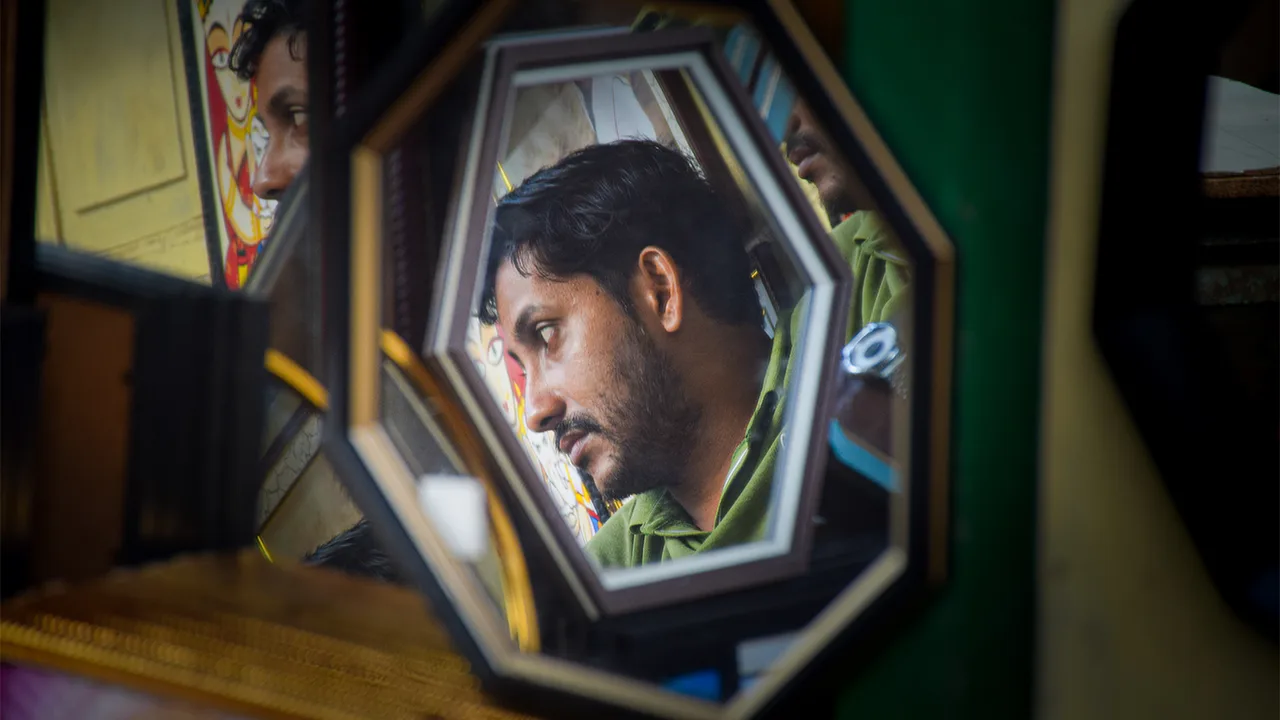
— Pratima Das, hawker from the Jadavpur area
When we decided that Sawaal’s first appearance as a web magazine would carry a special dossier on hawkers, the choice hardly seemed to require much explanation. Not at this moment.
After the change of government in the state, bulldozers appeared almost overnight at station forecourts, pavements and roadsides. Local residents and vendors stayed up through the night trying to save whatever they could. They failed. Citizens and political workers, too, kept vigil, built resistance where they could, and, in most places, failed to stop the evictions.
Orders have now gone out to clear almost every pavement in the city. No hawkers on government land. No hawkers on railway land. A woman warming milk for her child on a pavement is publicly rebuked by the minister in charge of urban development. Outside stations, the corpses of dismantled kiosks lie in rows.
The city is changing. Economic and social relationships that have grown into its history are being torn up with it. Thousands upon thousands are losing the ground beneath their feet. In such a moment, the word ‘hawker’ no longer names merely an economic occupation. It is becoming another narrative, standing against an aggressive order: a language of collective need, survival and struggle. A thoroughly political presence. At least, that is how we want to look at it.
Over the past weeks we have spoken to many people about hawkers and the so-called hawker problem. This dossier carries an essay by the distinguished economist Professor Subhendu Dasgupta, and an interview with Shaktiman Ghosh, organiser and veteran of the hawker movement. We have also spoken to CITU state president Anadi Sahu, secretary Ziaul Alam and AICCTU member Atanu Chakraborty. Their voices are here too. And we have spoken to hawkers in large numbers: some newly evicted, others living from day to day under the threat of eviction.
Through these conversations, interviews and discussions we have tried to understand the complicated history of the social existence called the hawker and of the problems built around it. Faced with the present crisis, we have also tried to learn how the question might be seen.
It seemed to us, then, that our own thoughts should also find a place in this issue, in this dossier. Perhaps somewhat untidy. Certainly incomplete. Let them remain so.
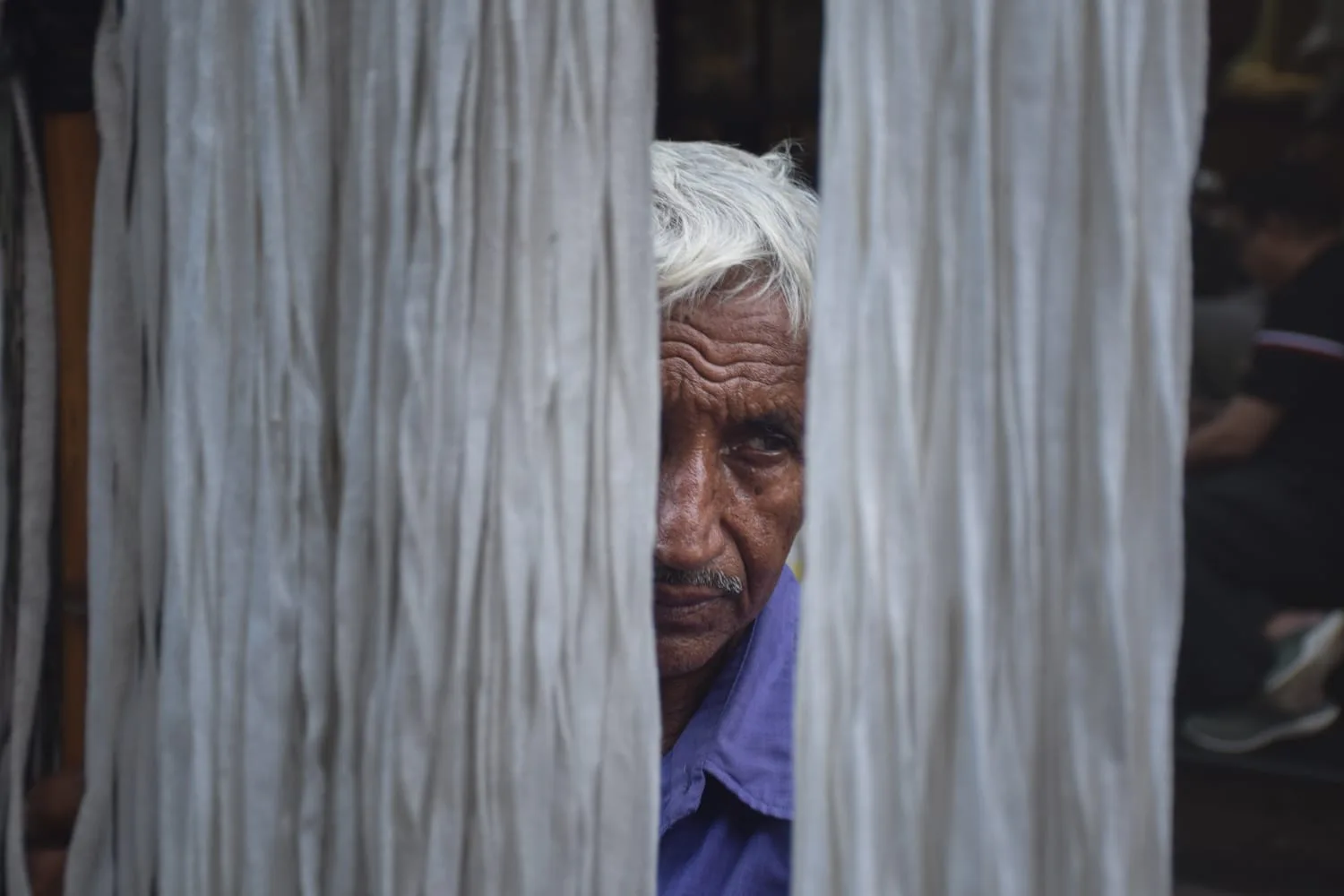
An Economy of ‘Disorder’, a Politics of ‘Disorder’
Say ‘Kolkata hawker’ and a familiar set of phrases arrives almost automatically.
– Hawkers have taken over the pavements.
– Pedestrians can barely walk.
– The occupation has spilled off the pavement and onto the road.
– Traffic congestion is getting worse.
– The streets are filthy.
– The city is becoming ugly and chaotic.
And so on. Inevitably we arrive at a question: aren’t pavements meant for ordinary people to walk on?
Of course they are. There need be no hesitation about that. But if everything we understand about hawkers keeps circling around this one question, we end up understanding neither the hawker nor the city around them. In fact, we miss something of the real character of this enormous, unruly Kolkata itself.
Kolkata is not simply its planned roads, flyovers, office towers, markets, parks, railway lines and government buildings. There is another Kolkata inside Kolkata. Pavements crowded with the small wares of thousands of people. Markets. Bustees here and there. Tea stalls without number. Rickshaws. Handcarts. Little food shops on wheels around railway stations. Outside the tight frame of the planned, regulated megapolis live innumerable stories of survival, alternative livelihoods, arrangements made by people for themselves. All of that together is Kolkata.
What the language of capital calls ‘disorder’ often contains signals of another kind: the hidden logic, rhythms and intelligence of society itself. Or perhaps ‘signals’ is the better word. Professor and political activist Subhendu Dasgupta was saying much the same thing when we spoke to him.
“My shop may look small to you. To me, this is my office. My son’s school fees come from here, my daughter’s medicine comes from here, the household market comes from here,” Pappu Das, a hawker near Ballygunge station, told us. The matter is almost disarmingly simple: where there are buyers, trade appears. Markets grow around places where large numbers of people need everyday goods at affordable prices. Prices themselves remain comparatively low because the market serves that demand. People look for work nearby. At the end of the day, workers and labourers look for somewhere close by to put their heads down. Somehow, they find it.
Settlement spreads around these spaces. Through everyday exchange, familiarity and trust, people become close to one another, sometimes almost kin. The state cannot provide a life free of insecurity and friction; people find gaps in official planning and regulation and improvise ways to stay alive. They assemble the arrangements through which work and life can continue. Inside the city, working people make an ecology of their own.
The market of ‘disorder’ has its own strange rules. Buyers find particular sellers and come to know them. Sellers learn their customers in return. If a regular face fails to appear for several days, the vendor worries, asks passers-by for news. It would be a mistake to reduce that worry to economic interest. In such ordinary scenes one can hear the heartbeat of a society that exceeds the formal space of capital. Vendors sell on credit because they know the buyer, often without wondering twice whether the account will eventually balance. When there is time, hawker and customer talk: family, illness, marriage, work, the rise and fall of everyday life. News travels through the market. Someone learns that a neighbour is ill. A wedding invitation passes across a stall. Someone hears that another person has lost a job. Economics may wish to explain the relation through the formidable grammar of ‘demand’ and ‘supply’; everyday life keeps blowing holes through that equation. Connections form between people, between memory and the present, between individual lives and society. The market is not closed to the well-off; anyone may buy cheap vegetables, clothes or food there. Yet at its centre remains a social world sustained largely by the economies of people with little money.
A hawker near Bally station in Howrah put it this way: “Many of them are not only my customers. Some have been coming here for twenty years. His daughter got married, his son found a job—we know all of it. If you remove the shop, it isn’t only my table that goes. These relationships go too.” This is why it is impossible to reduce a hawker to an ‘encroacher on the pavement’. The hawker belongs to a much larger economic and social system and, at the same time, poses a challenge to the institutional economy organised around capital. Small producers, customers, transport workers, bustee residents and daily-wage labourers are tied to that challenge. So are innumerable people whose livelihoods were never built inside corporate offices or formally recognised workplaces, and cannot survive there.
What Is ‘Disorder’? Who Gets to Decide?
The word ‘disorder’ can itself become intensely political. It can become a counter-narrative to power, even an affirmation of the lives of people who possess little power.
For those who want the city rearranged into a sleek, ultra-modern, GDP-driven metropolis, ten shops on a pavement amount to ‘encroachment’. For a daily-wage worker trying to eat before setting out for a long day, the same pavement is a market where food remains within reach. For a low-income household, such open ‘cheap’ markets supply many things that cannot be bought at the same price from formal stores. The pavement beside the road is therefore not only a route of passage; it is also a place from which life’s necessities are gathered. The question cannot stop at whether pedestrians should be able to walk freely and safely. Of course they should. The harder question is this: must the pedestrian’s right to move and the right to an informal livelihood necessarily be made enemies of one another?
The same question appears around bustees, roadside markets, rickshaw stands and all the little trades that spring up along a street. Seen from outside, they look ‘chaotic’. Shift the angle of vision and the same chaos begins to resemble a restrained social symphony of survival. Call it informal or unorganised: the economy has rhythms of its own, its own patterns of connection and its own customs. Someone stays open deep into the night because customers arrive late. Someone else opens before dawn because that is when the market comes alive. A person may do several kinds of work in the same day. Rain delays a train; the little hawker market outside packs up later in response. This economy cannot be made to fit a timetable of hours and minutes. The Administration nonetheless repeatedly tries to force it into fixed compartments. A designated place. Prescribed papers. A licence. Fixed opening and closing hours. A compact kingdom of rules.
The state says the city must run by firm rules. People who depend on pavements say those very rules can make survival impossible. The power to make law—and to decide when and how that law will be used—is, of course, not distributed equally between the two sides. That is the basic asymmetry. The rule may be declared the same for everyone; the power to write the rule is not. Nor is the authority to decide who is ‘legal’, who ‘illegal’, who ‘disciplined’ and who ‘disorderly’. ‘Disorder’, then, is often not the name of a neutral condition at all. It is a definition produced by power, and it falls hardest on those who cannot write institutional rules in their own favour.
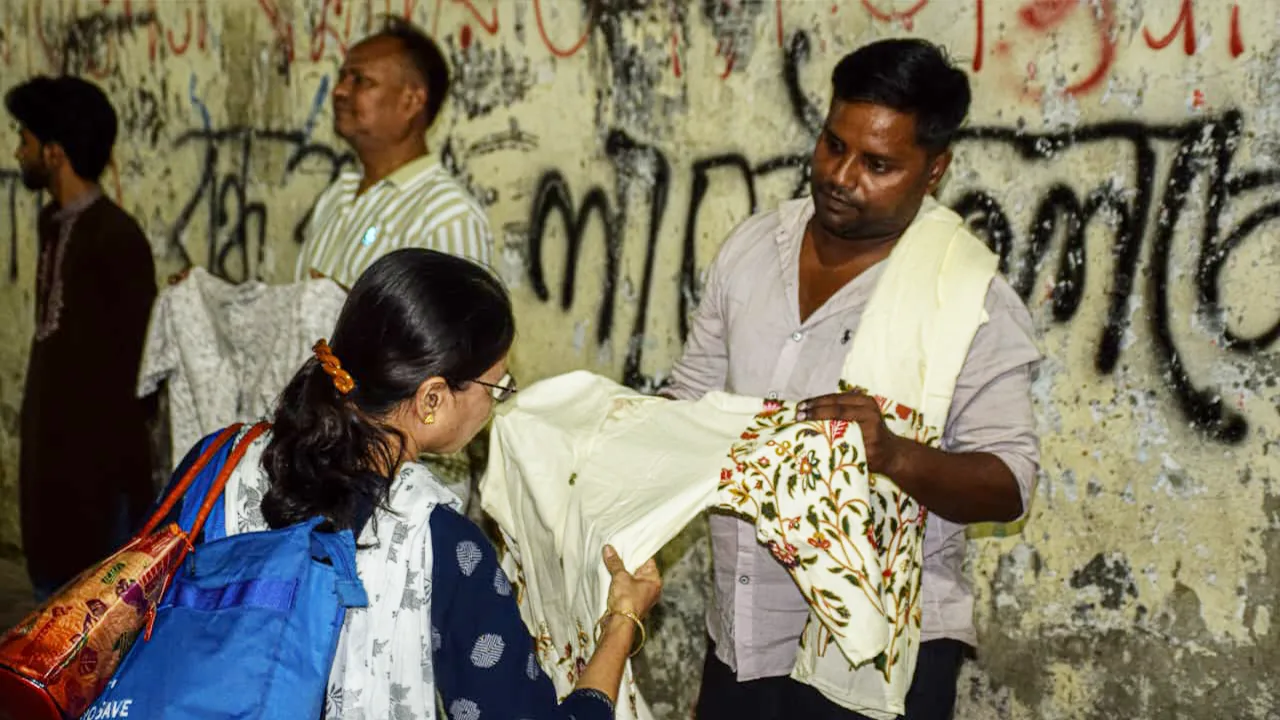
The History Behind ‘Disorder’
Like many other cities, Kolkata has an informal economy that cannot be understood apart from Partition and the long history of refugee migration. Beginning in 1947, enormous numbers of people from East Bengal arrived in the city as if cast out of a lost world. Kolkata’s economy makes little sense if their struggles to survive are left out of the account. Not all refugees received government jobs or permanent housing. Nor did everyone have access to formal markets. The newly independent and still unsteady Indian state could not plan the rehabilitation of all those who arrived. People forced overnight into a new country had to find their own means of livelihood. Slowly, some became small traders, some hawkers, some rickshaw pullers, porters, labourers, artisans and small producers. Markets appeared by roadsides, on open fields, beside bustees. Temporary arrangements hardened over time into unwritten economic rules. Remember that history and the pavement no longer need to be understood only through the word ‘encroachment’. For many, it became a workplace created by life itself.
The history of refugee women finding economic independence matters too. Many women from East Bengal began earning in an unfamiliar city through tiny trades—selling milk, for instance, and other everyday goods. They did not experience the pavement as government land they had ‘illegally occupied’. It was ground on which to live, earn and fight. Without this history, it is difficult to understand the organic landscape through which Kolkata grew.
The City as an Asset
Contemporary thinking about urban development has taught us to see the city above all as an economic asset. The pavement becomes part of ‘urban infrastructure’, where nothing may happen outside government sanction. Land and ownership become commercial property. Markets become organised commercial zones. Parks become state-regulated ‘public assets’. But a pavement is public. A park is public. If what belongs to everyone is placed under rules and controls decided elsewhere, does that not also shrink the rights of that ‘everyone’?
Whatever name we give to the taking away of rights, it happens in the name of development. And development comes dressed in glittering phrases. Modernisation. Cleanliness. Beautification. International standards. Listen long enough and development begins to sound like salvation itself: the shinier the city, the closer the people must be to deliverance.
But behind those dazzling words a question keeps returning. Where are poor people supposed to go in the endlessly refashioned, gleaming city? If beautification requires that a poor person be removed overnight even from a sliver of pavement, beautification no longer remains a matter of aesthetics. It becomes a question of class.
The problem is not urban planning. Cities need planning. Roads need to function; pedestrians need safety. Waste has to be cleared. Fire safety and public health matter. The trouble begins when, in the name of such planning, the very presence of poor people is erased from the city. Poverty does not disappear. It is made less visible. More accurately, a visible social reality is forcibly rendered ‘unreal’. The livelihoods and everyday survival of hundreds of thousands become uncertain. And the question grows larger: what, after all, do we mean by ‘development’?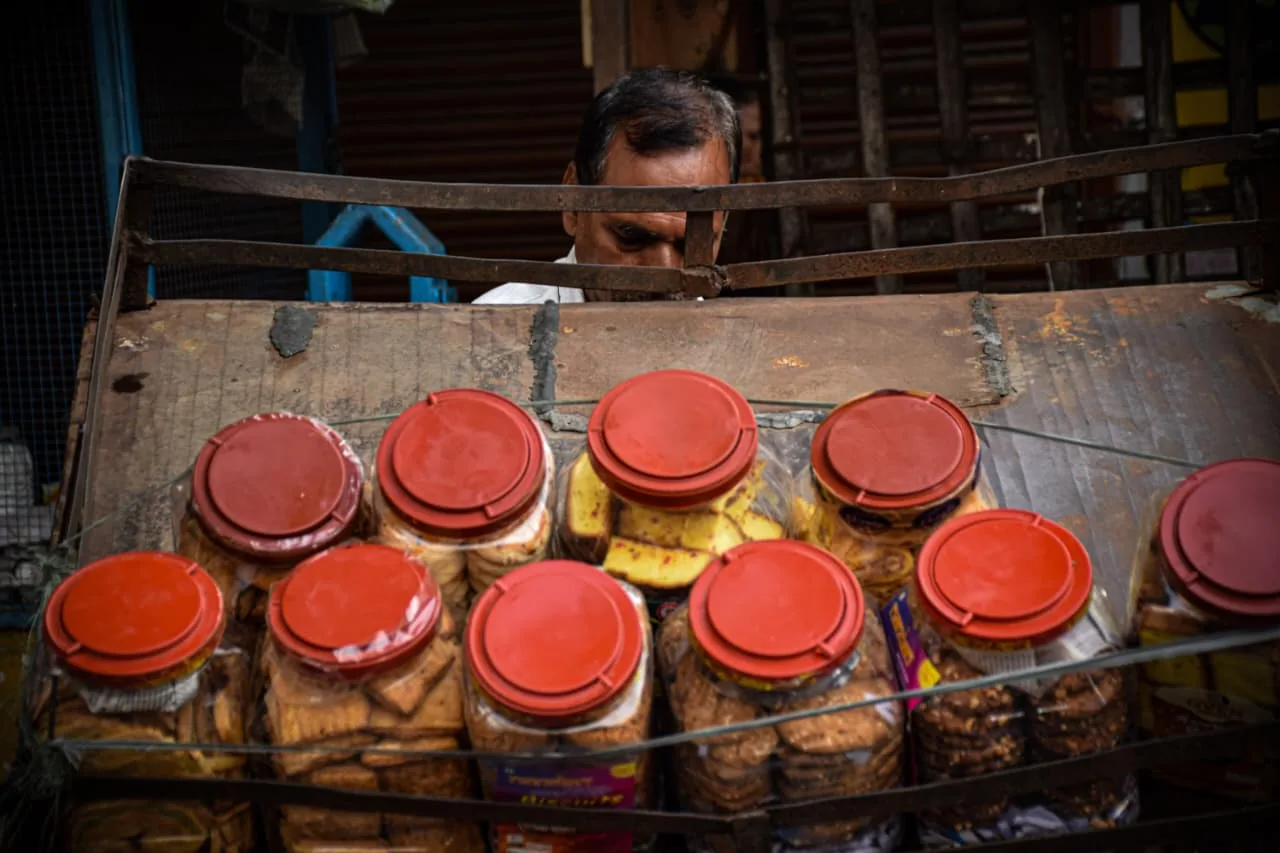
‘Operation Sunshine’: Eviction Then and Now
Speaking about the hawker evictions of the late 1990s, movement organiser Shaktiman Ghosh and Professor Subhendu Dasgupta both reminded us of something important: the fantasy of a ‘hawker-free city’ is hardly new. In West Bengal, the Left Front itself once launched the much-publicised ‘Operation Sunshine’.
Today leaders and activists of the parliamentary Left are on the streets resisting hawker evictions. Yet it was under the Left Front that an administrative ‘operation’ was mounted to destroy those very livelihoods. The Trinamool years also saw repeated eviction attempts. Under the BJP, the project has acquired a still larger and more decisive form. At least one thing follows. Hawker eviction is not the monopoly of any one government. Kings come. Kings go. Red, blue and saffron regimes replace one another. The insecurity of the hawker remains.
Why, then, does almost every party that enters government eventually reach for the eviction project? Part of the answer may lie in a bizarre, unreal idea of the city: it must, at all costs, be spotless and gleaming. There may be a deeper purpose too. Public space has to remain controlled. Government land must stay under government command. If control over roads and land becomes dispersed among thousands of users, the partnership of state and capital comes under pressure. An economy that grows around roads and land without central permission is also difficult to govern. The hawker therefore becomes uncomfortable for the state, irrespective of which party happens to run the government.
Sections of market-dependent media readily join the chorus. Making eviction socially acceptable is not an easy task. Everyday social habits have to be worked upon first. People must be told that although they buy clothes, jewellery and necessities cheaply from roadside markets after bargaining with vendors, the market is really an inconvenience to them. Pavements are for you to walk on, after all. A lived relationship is gradually made forgettable. The interests of government—or, more precisely, of capital—are translated and advertised as ‘the people’s interest’.
The struggle over hawkers’ rights therefore leads us to two further questions. Who actually has a right to public space? And who gets to acquire, distribute and control that right?
The Politics of Documents and Citizenship
There is another crucial question here: citizenship. Innumerable daily-wage workers, pavement dwellers and hawkers live precariously inside the present administrative order. No permanent address. No legally recognised proof of residence. Documents disappear through migration, disaster, eviction and repeated displacement. The contradiction is obvious. A person may work in a city for decades, supply cheap labour to its economy, raise children in one of its neighbourhoods, participate actively in the social and economic life of its markets—and still remain almost invisible in official records. Many hawkers represent precisely this condition. Their labour is visible. Their contribution to the economy is visible. Their legal security is not. Formal ideas of the city and citizenship collide with actual life. A worker may live in a city and sustain themselves through physical labour, yet possess nothing like the rights on its streets or pavements enjoyed by another, properly ‘documented’ citizen. And at any moment, an eviction can move them into the administrative column marked ‘does not exist’. Rootless again. Without a livelihood again.
Democratic Reconstruction Instead of Eviction
The politics of the hawker movement matters as much as its history. A movement is not only a march or a demonstration. Sometimes it demands alternatives from within the existing order itself. Shaktiman Ghosh reminded us of a striking example at Lansdowne Market, where hawker organisations jointly submitted bids to purchase or manage the market. People routinely labelled ‘encroachers’ entered the formal language of property and tendering and claimed a right to acquire the market. If a market is property, why should the people whose labour sustains it not become participants in that property? Why should they not at least possess the right to manage and control it collectively? To see this merely as resistance to eviction is to miss its political significance. It contained an imagination of another kind of urban order. The hawkers were not only trying to defend a place. They were asking who should have rights over the city’s resources, markets and public spaces.
Eviction, therefore, is not simply an economic loss. Its effects travel through an entire social ecology. At railway stations, on platforms and in little roadside markets, long acquaintance between buyer and seller, credit, trust and mutual dependence produce an economy that appears in no government record. Yet it keeps everyday life going for many people. An administration can clear a place by force. It cannot erase a social economy in the same way. It can push it elsewhere, tear it apart, weaken it. The effects remain, carried in social memory.
The same is true of bustee eviction. Rehabilitation is not complete because a family is handed a room somewhere else. An address is tied to work, school, market, healthcare, transport, neighbours and social relationships. Break that world and provide four walls elsewhere, and what you have is not rehabilitation but relocation. The alternative to eviction should therefore be democratic reconstruction. Hawkers can be recognised as citizens rather than criminalised. Their right to trade can be protected. Vending spaces can be planned without destroying livelihoods. Pedestrian movement can be secured without eliminating small trade. Safety and public-health rules can be made. What has to change is the meaning of planning itself—and the political angle from which the city is seen.
Those whose lives are being planned must have a place at the planning table. Urban planning should not be imposed upon them; it has to be made with them.
So, Whose City Is It?
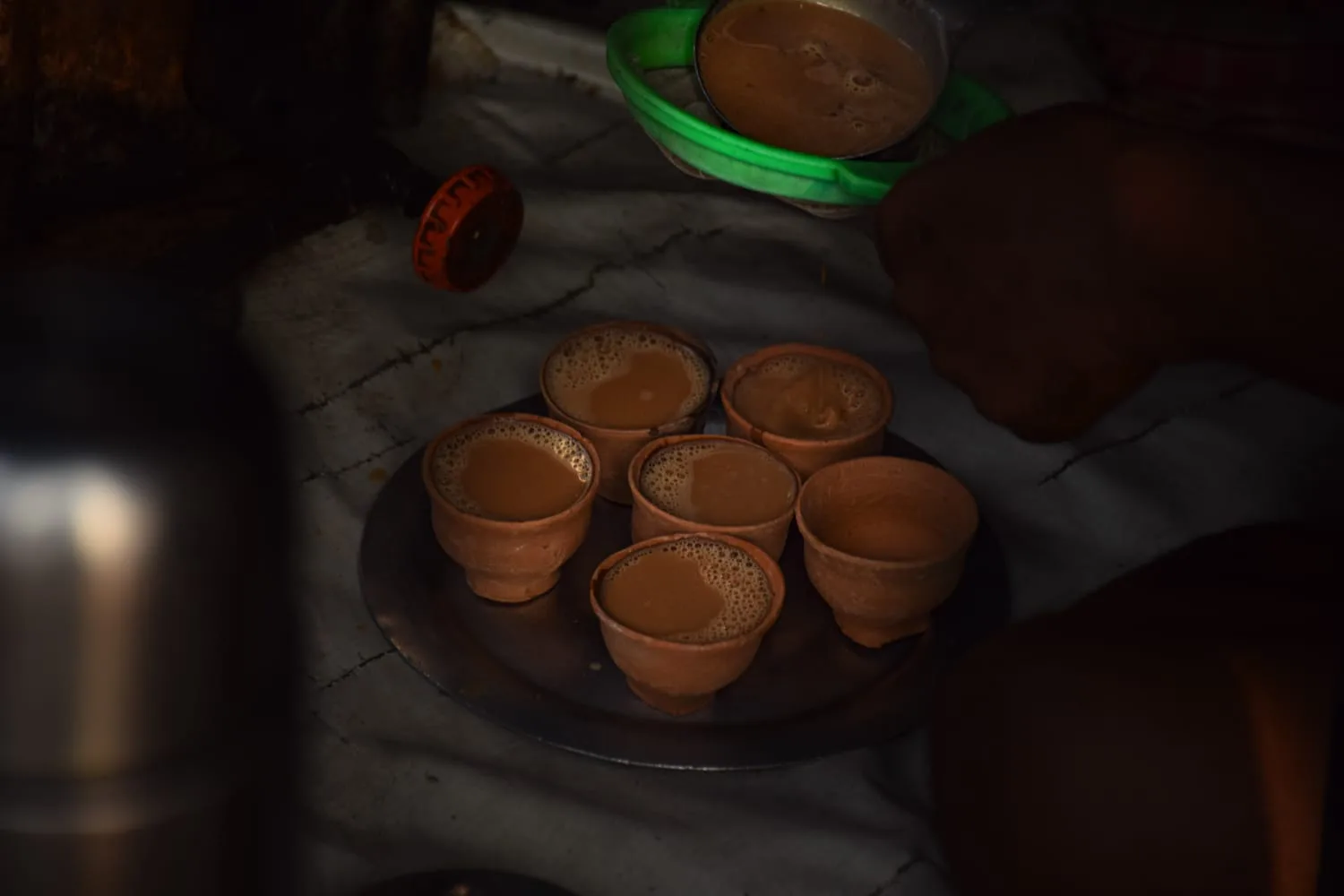
A pavement contains innumerable relationships of urban life. A vegetable seller arrives in the morning. An office-goer buys breakfast. A rickshaw puller drinks tea. A schoolchild buys a notebook. Someone buys medicine; someone asks for credit; someone stops to talk to an old acquaintance. At night, other working people use the same space. On paper, clearing a pavement may be an administrative decision. In life, it may destroy an existing market, numerous livelihoods, several neighbourhood relationships and decades of social memory. Breaking a hawker’s stall is therefore not merely removing a table, bamboo poles, a tarpaulin roof or a place to sit. It can shake the foundations of an entire social world.
That is the lesson of movements against hawker eviction. This is not merely a fight to save a few stalls. It is a struggle over the right to livelihood, the right to public space, citizenship and the right to remain visible in the city. The question no longer stops at whether hawkers should exist. It becomes: whom is the city for? Whose labour keeps it running? Whose presence counts as part of its normal landscape, and whose is labelled ‘illegal’, ‘disorderly’ or ‘ugly’? What politics of seeing produces that difference? Does the city belong only to its legal owners? Or also to those who keep it alive every day through labour, sweat, goods, services and an invisible web of relationships?
The answer to those questions determines the political meaning of the hawker issue. To talk about hawkers is never only to talk about hawkers. It is also to ask what we mean by urban democracy, public space, livelihood and development.
(Photo: Kushal Kar)